EAC Certification Aerial Work Platform Kazakhstan: Certificate, Not a Declaration
It needs a certificate. For EAC certification aerial work platform Kazakhstan, the route is certification rather than declaration — an aerial work platform cannot be placed on the market in Kazakhstan on the basis of a conformity declaration.
That answer is not a matter of interpretation. The technical regulation on machinery safety carries two product lists — one of items requiring certification, one of items covered by declaration — and equipment described as подъемники с рабочими платформами (lifts with working platforms) appears in the certification list, at item 13. It does not appear in the declaration list at all.
The second point that shapes every commercial conversation: the applicant has to be an entity registered inside the customs union. A factory in China cannot hold the EAC certificate in its own name. That single rule decides how a supply agreement has to be structured before any technical discussion starts.
The short answer
For aerial work platforms entering Kazakhstan:
- The equipment falls under the customs-union technical regulation on machinery and equipment safety (ТР ТС 010/2011).
- EAC certification aerial work platform Kazakhstan runs through the certificate route, not the declaration route. Aerial work platforms are named in the certification list; they are absent from the declaration list.
- The applicant must be an EAEU-registered legal entity — the Kazakh importer, or a representative established in the union. The manufacturer supplies the technical file and signs an authorisation.
- The regulation was amended in 2026, expanding the certification list to 31 categories and the declaration list to 64. Aerial work platforms were in the certification list under the previous version as well, so the conclusion holds either way.
- A separate national permit may apply at the point of use in Kazakhstan. That is not a customs-union step, and for this equipment it depends on where the machine is used.
Certificate or declaration — this part is settled
The two lists are the whole question, so it is worth quoting the entry.
The certification list, under the heading covering lifting and handling machinery, names among others:
подъемники с рабочими платформами — lifts with working platforms
alongside facade construction hoists, escalators, passenger conveyors, cranes and lifting platforms for people with reduced mobility.
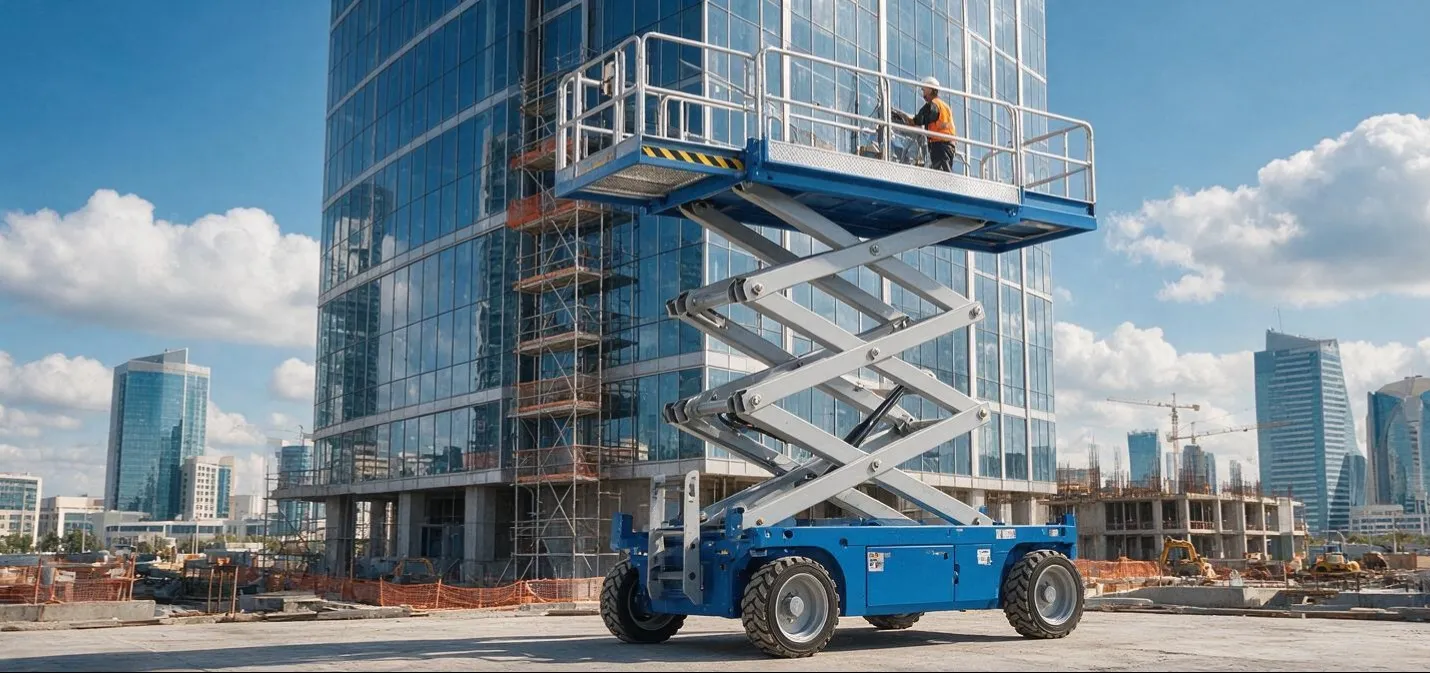
That phrase is the customs-union term for what the market calls an aerial work platform, a MEWP or a scissor lift. The same equipment appears again in the annex covering self-propelled machinery, under the same heading — which confirms the regulator treats it as self-propelled machinery requiring the associated technical documentation.
The declaration list contains no entry covering it. The nearest entries concern lifting accessories supplied separately from machinery, and one entry that explicitly excludes lifts.
Why this matters commercially. A certificate and a declaration are not alternative ways of doing the same thing. A certificate is issued by a recognised certification body following its own assessment, with testing and factory inspection where the scheme requires it. A declaration is adopted by the applicant. If a supplier offers to “arrange the declaration” for an aerial work platform, they are offering the wrong document — and the error tends to surface at the border or when the machine is first inspected on site.
The two dates worth knowing
The regulation has been in force since 2013 and was amended by a decision adopted in March 2026. On the transition dates there is an ambiguity worth flagging honestly, because different sources describe it differently.
The amendment applies across the framework from 2026, with the revised product lists to be applied on a later date in 2028. Published commentary has split the two — describing the lists as taking effect in 2028 while other provisions apply from 2026 — and the effective-clause text is not machine-readable in the official PDF, so buyers will encounter both readings.
The practical point is that this ambiguity does not change the answer. Aerial work platforms were in the certification list under the previous version of the annexes as well, as part of the lifting and handling equipment heading. Under either reading of the transition, the document required for an aerial work platform is a certificate.
What the amendment does change is scope: categories that previously sat in the declaration route now require certification. If your supplier is working from an older file, ask which version of the annex list they checked, and which item number they are relying on.
Who can hold the certificate
The applicant must be a legal entity registered in an EAEU member state. In practice:
- The Kazakh importer, or a representative established in the union, applies for and holds the certificate.
- The manufacturer provides the technical file — drawings, specifications, test evidence, manuals, markings — and signs an authorisation where the applicant is not the importer.
- The manufacturer’s name appears on the documentation as the producer. What it cannot do is carry the certificate itself.
One caveat on sourcing: the requirement that the applicant be a union-registered entity is stated consistently by certification bodies and is grounded in the union’s standard conformity assessment schemes and the rules on registering declarations. The machinery regulation itself carries the requirement explicitly for one specific route — a one-off declaration for self-propelled machinery, limited to 100 units — so treat the general rule as well established in practice, and confirm the current wording with the certification body handling your file.
The commercial consequences are worth anticipating. If the buyer has no union-registered entity able to apply, the transaction structure has to change before it can proceed. And because the certificate is held by the importing side, the manufacturer’s technical file has to be good enough for someone else to defend in front of a certification body — a different standard from producing a specification sheet.
Other regulations that can stack on top
Three points come up often enough to settle in advance.
Aerial work platforms are not elevators. The union’s technical regulation on lifts covers passenger and goods lifts running on rigid guides, escalators, moving walks and lifting platforms for people with reduced mobility. An aerial work platform does not fall within it, so no separate lift certification applies.
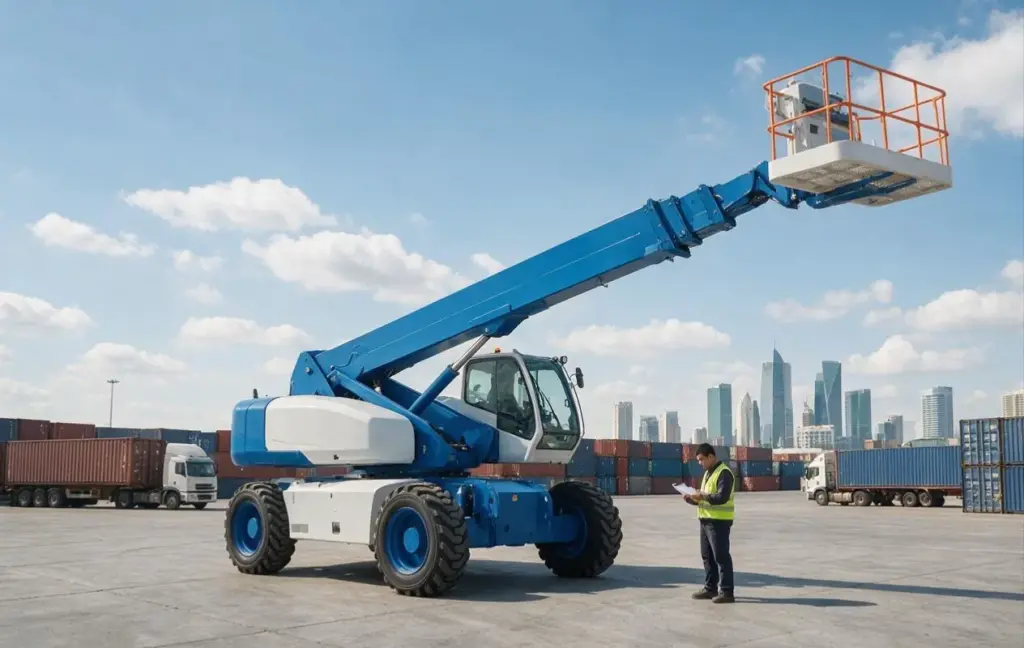
Vehicle-mounted platforms are split across two regulations. Where the machine is built on a road-vehicle chassis, the chassis is treated as a wheeled vehicle and the platform it carries is treated as equipment mounted on it. That means the vehicle side and the work-platform side are handled under different regulations. Self-propelled scissor, mast and boom lifts are not road vehicles and are handled as self-propelled machinery.
Electrically driven machines can attract additional requirements. Low-voltage equipment and electromagnetic compatibility regulations apply to the electrical parts, and explosion-protection requirements apply to machines intended for hazardous atmospheres. These sit alongside the machinery certificate rather than replacing it.
The national permit question
Satisfying the customs-union requirement is not necessarily the end of the process in Kazakhstan. The national industrial safety regime provides for a permit to use certain technical devices, obtained after installation and based on a local expert assessment.
Whether an aerial work platform falls within that regime is not settled in the sources we could verify. The categories named in the national framework are lifting mechanisms, escalators, cable cars, funiculars and lifts; aerial work platforms are not named among them, and certification-sector commentary does not list them either. The most likely position is that it applies where the machine is used at a hazardous production facility — petrochemical, mining or similar — rather than generally.
Where it does apply, it is a use-stage obligation sitting with the local operator, obtained through the national e-government portal, and it follows the EAC certificate rather than replacing it. Ask your importer to confirm the position for the specific site, and treat it as a commissioning-date issue rather than a shipping-date one.
A related point: Kazakhstan’s national standards system still exists, but for any product covered by a customs-union technical regulation the EAC document is the operative one and is what customs requires. A national-standard certificate is not a substitute for it.
How a Kazakh buyer verifies a certificate
- Ask for the certificate number and the issuing body, then look it up. Verify through the national registry of the issuing country — Russian and Kazakh registries are the practical route, as the union-level portal has been reorganised and is not currently a reliable lookup.
- Check the applicant name. It should be a union-registered entity. If a Chinese company appears as applicant, look closer.
- Check the document type. It should be a certificate. A declaration for an aerial work platform is the wrong instrument.
- Check the product scope against the machine being shipped — a family name on the certificate and a specific model on the order deserves a question.
- Check the validity dates against the version of the annexes the body worked from.
- Confirm the authorisation between applicant and manufacturer, where they are different parties.
The same “which route applies to this exact machine” question shows up in other markets that run their own conformity regimes before the equipment reaches the market: Kenya requires a PVoC certificate of conformity obtained before shipment, while Vietnam works through a conformity declaration made by a Vietnamese entity once the machine is in the country.
What to settle with your supplier before you order
- Who will be the applicant, and whether that entity is established in a member state.
- Confirmation that the route is certification, and which annex item it rests on.
- Which version of the regulation the body will assess against.
- The authorisation agreement, and who prepares it.
- The technical file contents the applicant will need, and how long the manufacturer needs to produce them.
- The vehicle-chassis question, if the machine is mounted rather than self-propelled.
- The national permit position, and who confirms it locally.
Frequently Asked Questions
Does an aerial work platform need an EAC certificate or a declaration for Kazakhstan?
A certificate. EAC certification aerial work platform Kazakhstan rests on the certification list of the machinery safety technical regulation, which names equipment described as lifts with working platforms; the declaration list contains no entry covering it. The document has to be issued by a recognised certification body.
Can a Chinese manufacturer hold the EAC certificate?
No. The applicant must be a legal entity registered in an EAEU member state. The manufacturer provides the technical file and signs an authorisation, but the certificate is held by the importing side or a representative established in the union.
What changed in the 2026 amendment?
The amendment expanded the certification list to 31 categories and set out 64 categories covered by declaration, moving some machine types from the declaration route to certification. Aerial work platforms were in the certification list under the previous version as well, so the required document did not change.
When do the new lists take effect?
The amendment’s provisions apply from 2026, with the revised product lists being applied on a later date in 2028. Published commentary describes the transition in different ways, which is why it is worth asking the certification body which list version they are assessing against. Under either reading, an aerial work platform requires a certificate.
Is EAC certification the same as CE?
No. They belong to different regulatory frameworks, and CE is not accepted in place of the EAC document in Kazakhstan. CE documentation can support the technical file, but the customs-union requirement stands on its own. For how CE itself is structured, see our CE compliance guide for aerial work platforms.
Does a vehicle-mounted platform need anything beyond the machinery certificate?
Yes — where the machine is built on a road-vehicle chassis, the chassis is handled under the wheeled-vehicle regulation while the mounted work platform is handled as machinery. Self-propelled lifts are not road vehicles and do not raise this question.
Is there anything else required in Kazakhstan besides EAC?
Possibly, depending on where the machine is used. The national industrial safety regime provides for a permit to use certain technical devices, obtained after installation following a local expert assessment. Aerial work platforms are not named among the device categories in the national framework, so it most likely applies only at hazardous production facilities. Confirm the position for the specific site.
How can I check whether an EAC certificate is genuine?
Through the national registry of the issuing country — the Russian and Kazakh registries are the practical route. Check the certificate number, the issuing body, the applicant, the document type and the product scope.
Before you place the order, settle who the applicant will be, that the route is certification, and which version of the annexes the body will assess against. If you are purchasing an aerial work platform from Chenlift, we can provide the technical file and authorisation documentation your applicant will need — our Kazakhstan market page sets out the ranges we supply to the market.
Official References
- Customs union technical regulation on the safety of machinery and equipment (ТР ТС 010/2011), adopted 18 October 2011, in force since 15 February 2013
- Eurasian Economic Commission — Decision No. 36 of 13 March 2026 amending the regulation, official text (PDF, 53 pp.): https://docs.eaeunion.org/upload/iblock/be8/h4udbqj752kpzfej502qel57dnoenwon/Reshenie-Soveta-_-36-ot-13-marta-2026-g.pdf
- Eurasian Economic Union official documents portal: https://docs.eaeunion.org/
- National accreditation and conformity document registries of the EAEU member states — verify the certificate through the registry of the issuing country
*Editorial note: the customs-union machinery regulation was amended in 2026, and the transition to the revised product lists is described differently across published sources. This article reflects the annex text as verified at the date of writing and is not a legal opinion. Confirm the applicable annex item, the document type and the national permit position with a recognised certification body and your importer in Kazakhstan before relying on it for a shipment.