Aerial Work Platform
Supplier India
भारत के लिए CE-प्रमाणित एरियल वर्क प्लेटफ़ॉर्म — निर्माण स्थलों से लेकर मेट्रो बुनियादी ढाँचे तक
Chenlift is the CE-certified aerial work platform supplier India’s rental fleets, distributors, and EPC contractors buy from directly — self-propelled scissor lifts, aluminium mast lifts, and high-reach boom lifts, shipped from our Suzhou factory.
boom, lift table, dock, picker
— 1,155 km network, 2026
HTJ Telescopic Boom
model by model
Why India’s Construction Market Demands Aerial Work Platform Suppliers
India’s Building Boom Is the Primary Driver
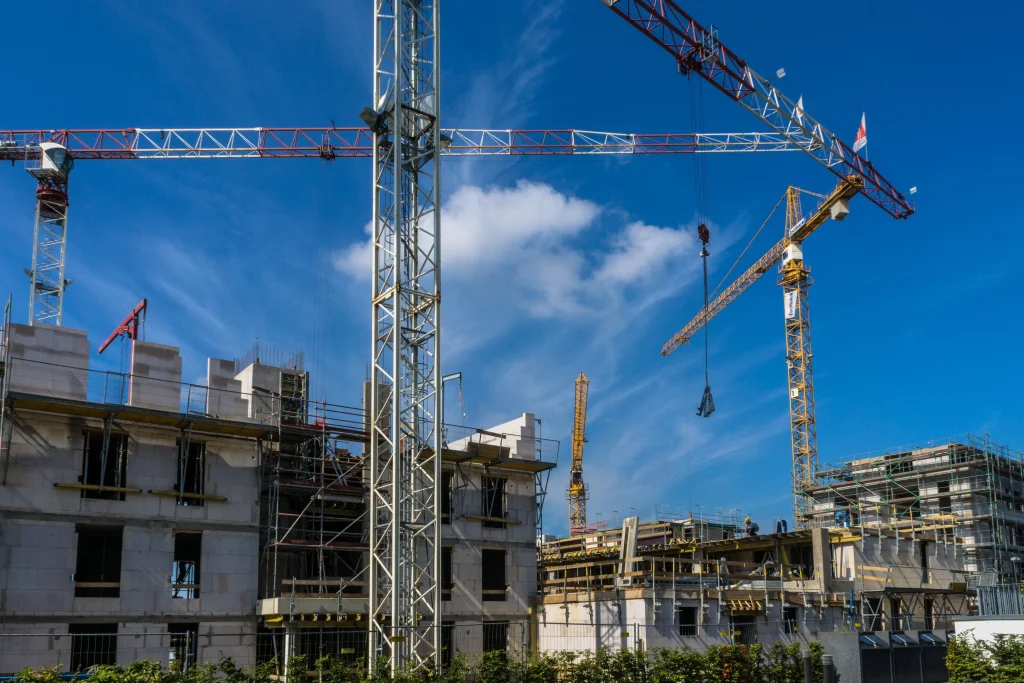
India’s most common MEWP application — as seen in Chenlift’s India order book — is active construction sites: commercial towers, residential high-rises, hotels, hospitals, and industrial facilities under construction across every major city.
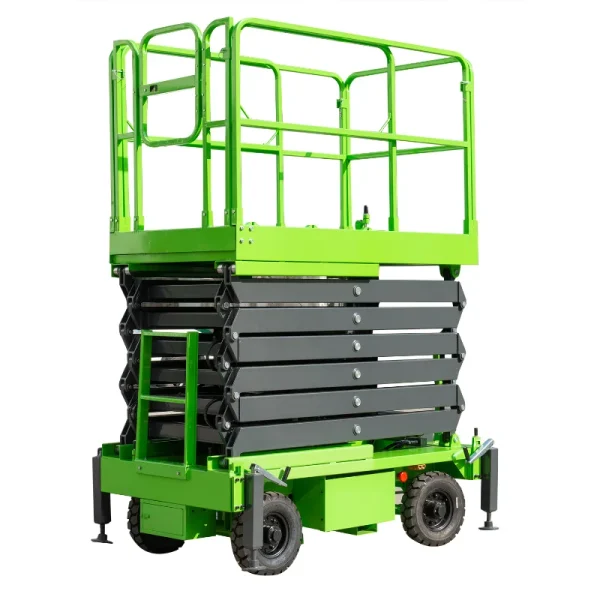
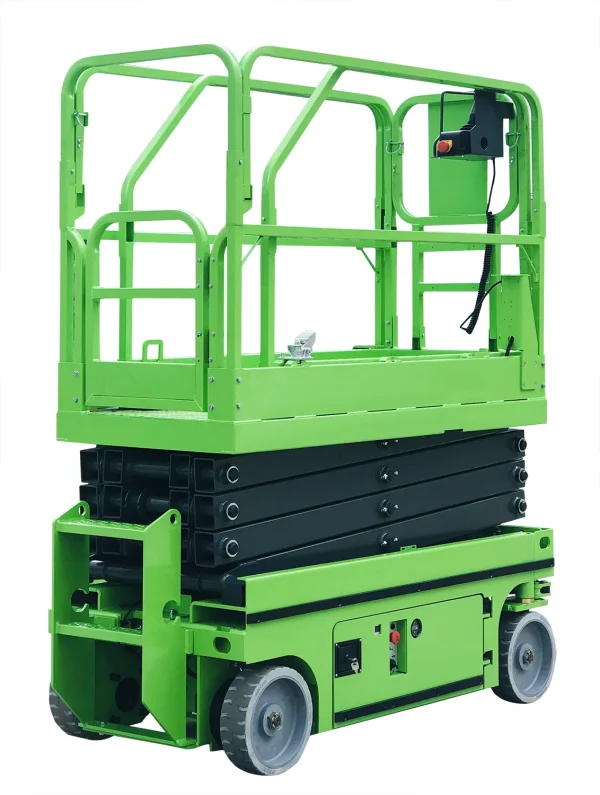
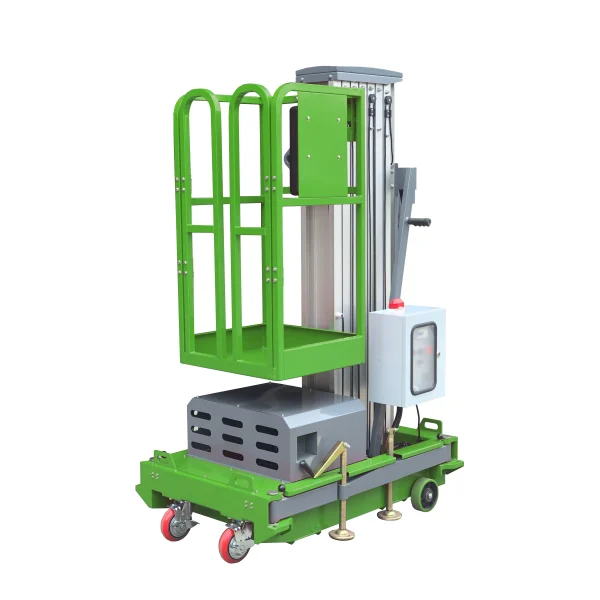
Contractors replace scaffolding with electric scissor lifts and mast lifts for interior fit-out, MEP installation, ceiling work, and finishing. MX, ME, and MK Series are the three lines Indian buyers order most.
India’s Metro Boom Drives High-Reach Demand
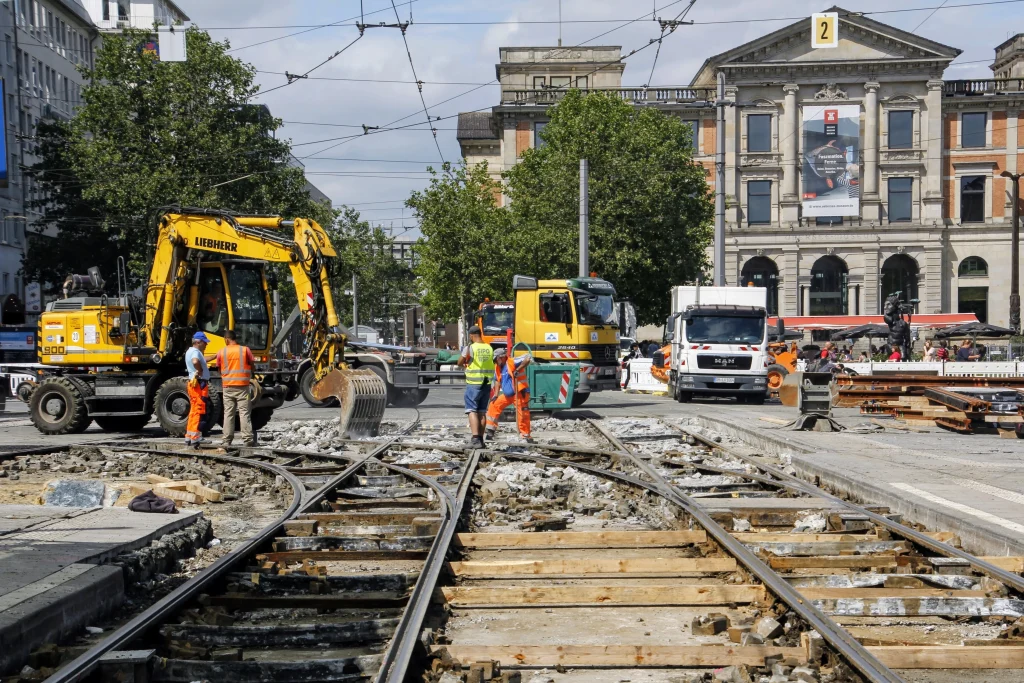
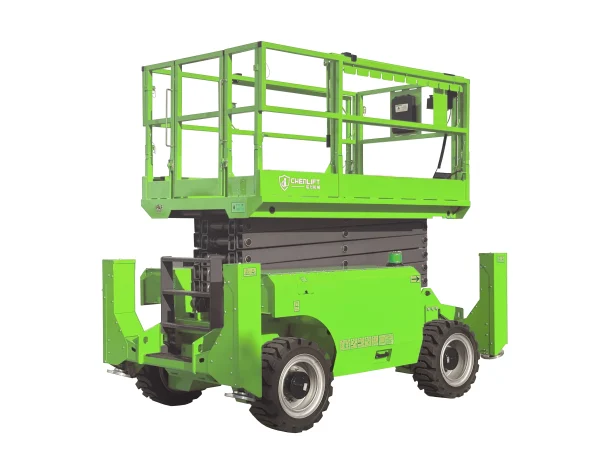
Metro rail now runs in 26 Indian cities — 1,155 km of operational network as of March 2026, the world’s third-largest. Delhi NCR, Mumbai, Bengaluru, Hyderabad, Chennai, Pune, and Kolkata are the busiest corridors, and more than a dozen further projects are under construction. Those sites need outdoor-capable rough terrain scissor lifts and high-reach boom lifts for station construction, elevated viaduct work, and structural steel installation — see our Metro & Rail aerial work platform range.
India’s Warehouse Boom Is a Height Problem, Not Just a Space Problem
Leasing of industrial and warehousing space across India’s top eight cities reached 36.9 million sq ft in 2025, up 16% year on year, with third-party logistics operators taking almost a third of Grade A uptake and engineering plus e-commerce occupiers adding roughly another 35%. Developers delivered 41.7 million sq ft of new supply in the same year — the highest annual addition in recent years — yet vacancy held at around 16% and average rentals in the main logistics clusters still rose 5–10% (Colliers India, Industrial Snapshot Q4 2025).
What decides the machine is the specification, not the floor area. The Grade A warehouse specification published by JLL puts internal clear height at 9–13.5 m, on FM2-compliant laser-screed floors with a 5 t/m² design load — enough to carry high-bay pallet racking and mezzanine decks. A 10 m ceiling is not something you work from with a ladder. The demand shows up in fleets too: IPAF’s 2026 Rental Market Report, compiled by Ducker Carlisle, records India’s MEWP market growing 18% in 2025 on a 14% increase in fleet size and higher utilisation.
Where it concentrates matters as much as the total. Bhiwandi outside Mumbai led 2025 Grade A leasing with about 4.9 million sq ft, followed by Chakan–Talegaon near Pune and Oragadam near Chennai with more than 2.5 million sq ft each, while Delhi NCR (24%) and Chennai (22%) led the cities. Those parks are exactly where racking installers, fit-out contractors and facility teams need machines that work indoors, on polished floors, between occupied racking.
Warehouse buyers order the same three lines as construction contractors, for a different reason. The ME Series single mast lift (8–12 m, 125 kg) is narrow enough to travel down a racking aisle and light enough to move between dock areas. The MX Series self-propelled scissor lift (7.8–17.8 m, zero turning radius) drives at full height, so repositioning along a run of high-bay lights does not mean coming down each time. The MK Series push scissor lift (8–18 m, 500–1,000 kg) covers racking steel, palletised stock and mezzanine components rather than a technician with a tool bag. All three are electric, indoor-rated, and CE documentation is confirmed per model.
Sources: Colliers India, Industrial Snapshot Q4 2025 (14 January 2026); JLL, Indian Logistics and Warehousing — Tracing the Lifecycle (Grade A specification table); IPAF 2026 Rental Market Report, compiled by Ducker Carlisle.
PLI Factories Create Demand Twice — at Fit-Out, Then Forever After
The Production Linked Incentive scheme has approved 836 applications across 14 sectors and, as of 31 December 2025, had attracted cumulative investment above ₹2.16 lakh crore and generated production and sales above ₹20.41 lakh crore, with exports over ₹8.3 lakh crore and more than 14.39 lakh direct and indirect jobs (Press Information Bureau). Electronics alone reported ₹2,45,375 crore of incremental production from 59 companies in the financial year to December 2025; automobiles and auto components added ₹13,126 crore from 72 companies.
Those plants are going into planned locations. Under the National Industrial Corridor Development Programme, 20 projects across 13 states and 7 industrial corridors are approved, four industrial smart cities — Dholera, Shendra-Bidkin, Greater Noida and Vikram Udyogpuri — are in production, and against 469 allotted plots covering about 5,348 acres, 134 units are operating with 95 under construction (NICDIT, August 2026). Every one of those plants needs height access twice: once during construction and fit-out, then permanently, for maintenance.
Rooftop solar turns maintenance into scheduled work. India added 2.7 GW of rooftop solar in Q1 2026, up 125% year on year, taking cumulative rooftop capacity to 23.5 GW at the end of March 2026, with industrial and commercial rooftops contributing roughly 11% of the quarter’s additions (Mercom India Research, Q1 2026 India Rooftop Solar Market Report). Panel cleaning, inverter access and roof repairs repeat on a fixed cycle — the same pattern as plant MEP repair.
For context: the HSBC India Manufacturing PMI compiled by S&P Global fell to 52.8 in August 2026, its weakest reading in five years, though still above the 50 line that separates growth from contraction. Slower order growth tends to push plants towards maintenance and efficiency work rather than expansion, which does not reduce the case for owning access equipment.
Indian factories also run a documented inspection regime. Under the Factories Act 1948, lifting machines must be thoroughly examined by a competent person at least once every twelve months, with the safe working load marked on the machine and particulars entered in a prescribed register (Section 29; six months for hoists and lifts under Section 28). The Occupational Safety, Health and Working Conditions Code 2020 applies alongside it, with the Building and Other Construction Workers Act 1996 on site, fall protection referencing IS 3521 and access equipment IS 3696. So a plant buyer needs three things from a supplier, and Chenlift ships all three: the Declaration of Conformity for the exact model, an English operator and maintenance manual, and documentation that lets the competent person open that register on day one. Confirm the applicable state factory rules with your safety officer.
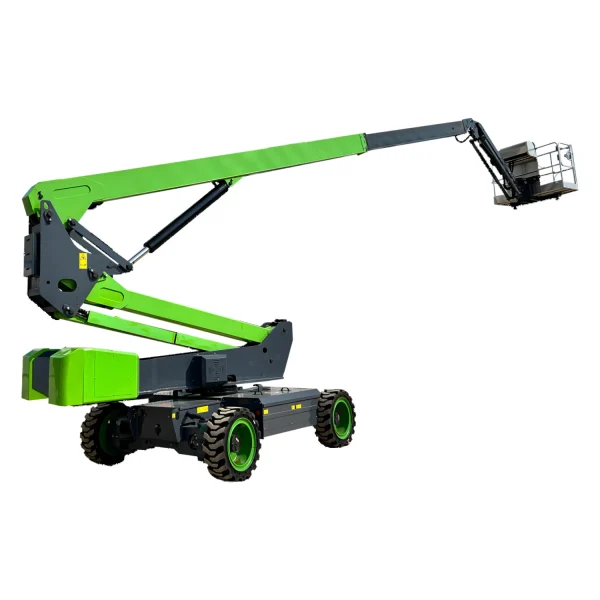
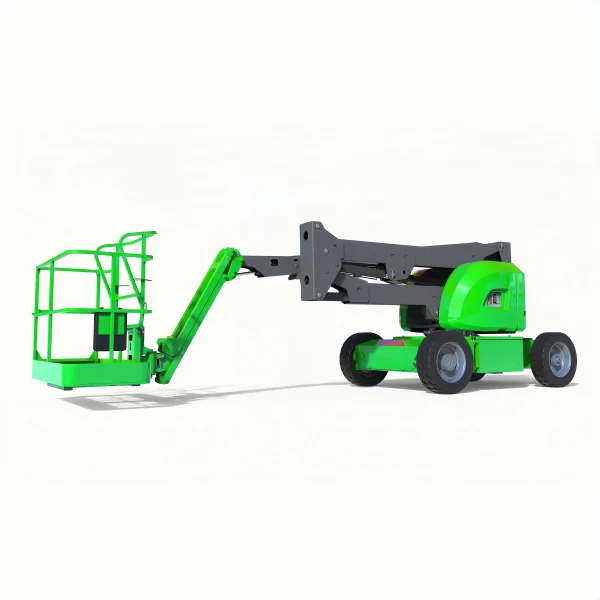
Inside the plant, MX Series electric scissor lifts cover production-floor MEP and equipment access, ME Series mast lifts move between floors and through doorways, and MK Series (500–1,000 kg) carries tooling, moulds and spares up with the technician. Outside, MRT Series rough terrain scissors (10–18 m, 4WD) cover plant yards and rooftop solar, while HTJ telescopic booms (up to 48 m) and HAJ articulating booms (up to 40 m) reach stacks, silos and pipe racks.
Sources: Press Information Bureau, PLI cumulative performance as on 31 December 2025; NICDIT third apex monitoring meeting, 17 August 2026; Mercom India Research, Q1 2026 India Rooftop Solar Market Report; HSBC India Manufacturing PMI (S&P Global), August 2026.
Aerial Work Platform Supplier India: Indoor and Outdoor Equipment
Indoor electric machines for construction fit-out and building sites. Outdoor rough terrain and high-reach equipment for metro and infrastructure. CE documentation confirmed per model, shipped directly from Suzhou.
Chenlift in India
Chenlift sells direct from the factory to established Indian distribution and rental partners. Distributors, rental fleets, and material handling companies buy from an aerial work platform supplier India’s construction, warehouse, and metro projects depend on — HSN documentation, spare parts, and English-language manuals are handled factory-side. Partner names are withheld on request; named references are available under NDA.
What India Buyers Get
Certification for India Import
India has no mandatory BIS certification requirement for aerial work platforms. The Machinery and Electrical Equipment Safety (Omnibus Technical Regulation) Order, 2024 — notified as S.O. 3649(E) of 28 August 2024, later postponed to 1 September 2026, and due to require BIS certification under Scheme X for 20 machinery categories — was rescinded in full by S.O. 239(E) of 14 January 2026 (gazetted 16 January 2026) under Section 16 of the Bureau of Indian Standards Act, 2016, with immediate effect. The Order never came into force, so no Scheme X licence or Certificate of Conformity applies to our range.
Scissor lifts, mast lifts, and boom lifts enter India under HSN 84289090 / 84279000, and import policy is Free — no import licence is required for the machine itself. That classification decides the duty you pay, not certification: with the Order withdrawn there is no BIS registration to obtain. Confirm the 8-digit HSN code with your customs house agent before booking. If India notifies a future sector-specific Quality Control Order, we flag it at quotation stage.
India operates no MEWP product certification programme equivalent to CE (EU) or SABER (Saudi Arabia). IPAF‘s technical guidance is built on the EN 280 and ANSI A92 series — the same standards Chenlift’s CE documentation references — and CE certification from UDEM International is the de facto benchmark India’s multinational operators and project owners apply when evaluating equipment sourced from China. Every machine Chenlift ships comes with a Declaration of Conformity and an English-language operator manual, with the CE mark on the identification plate for models covered by the quoted certificate. For SABER support on shipments transiting to Saudi Arabia, see the Saudi Arabia market guide.
What It Costs to Land a Machine in India
Duty on aerial work platforms under HSN 84289090, at rates notified for 2026. Import policy is Free — no import licence is required for the machine itself, though your firm still needs a valid IEC (Import Export Code) to import at all. Figures below are indicative; confirm on ICEGATE before filing.
| Cost component | Rate | On ₹10,00,000 CIF |
|---|---|---|
| Basic Customs Duty (BCD) | 7.5% of assessable value | ₹75,000 |
| Agriculture Infrastructure & Development Cess (AIDC) | 7.5% of BCD | ₹5,625 |
| Social Welfare Surcharge (SWS) | 10% of BCD + AIDC | ₹8,063 |
| Integrated GST (IGST) | 18% of CIF + BCD + AIDC + SWS | ₹1,95,964 |
| Total duty payable at port | ≈28.47% of CIF | ₹2,84,651 |
IGST is creditable. A GST-registered importer claims the ₹1,95,964 IGST back as input tax credit, so the genuinely non-recoverable cost is BCD + AIDC + SWS — about 8.87% of CIF, not 28.47%. Budget the full amount in cash at the port; the credit returns with your next GST return.
Scaled up, a ₹1 crore CIF shipment carries a port bill of roughly ₹28.5 lakh, of which about ₹19.6 lakh comes back as credit — the net ₹8.87 lakh does not move. Bank charges, CHA fees, port levies, inland transport, and any anti-dumping or safeguard duty are additional.
Rates verified against CBIC / ICEGATE and current as of September 2026 — they change with each Union Budget, so re-check with your customs house agent before you commit to a landed-cost model.
Common Questions from India Buyers
Request a Supply Quotation for India
Contact Chenlift with your model requirements, quantities, destination port, and delivery timeline. The team will provide a landed-cost quotation and advise on the right product configuration — construction site fleet, metro infrastructure, or mixed rental fleet.