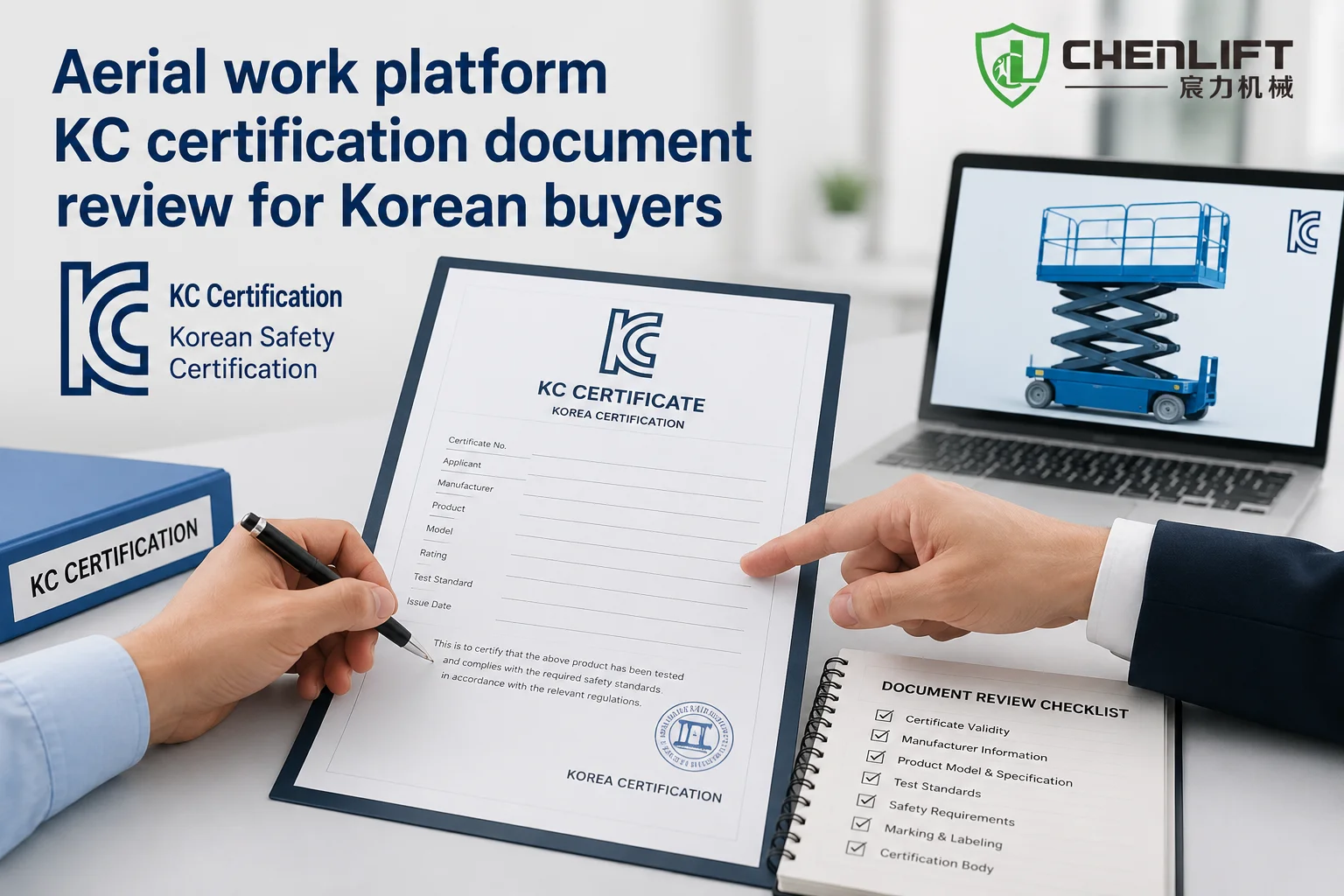
Aerial Work Platform KC Certification: 8-Step Buyer’s Guide for Korean Market Entry
A container arrives at Busan Port. Inside: a scissor lift with CE marking, an English operator manual, and a factory test report. The supplier calls it “KC-ready.”
Three weeks later, the machine is still in customs hold. KOSHA inspectors have questions about the emergency-lowering documentation. The rental fleet manager cannot add the unit to insurance coverage because the KCs certificate does not match the serial number on the identification plate. The operator manual is in English only, and the construction site safety officer refuses to sign off on deployment.
That is the compliance gap. Not a missing certificate. A real certificate that does not match the machine, the market, or the documentation chain.
This guide gives Korean importers, distributors, rental fleet operators, and procurement managers a buyer-side framework for verifying KC readiness before the PO is signed—using Korean regulatory standards, not supplier marketing claims.
KC Certification ≠ One Certificate: The Korean System Explained
“KC certification” is not a single document. It is a family of conformity assessment routes under multiple Korean laws, administered by different authorities, with different requirements for different product categories.
For aerial work platforms, three regulatory layers typically apply:
Layer 1: KCs (Korea Certification of Safety) — Industrial Safety
Governed by the Industrial Safety and Health Act (산업안전보건법), administered by KOSHA (Korea Occupational Safety and Health Agency).
KCs certification has three types:
表格
| Type | Assessment Level | Factory Audit Required | Typical for MEWPs |
|---|---|---|---|
| Type 1 | Full product testing + quality system audit | Yes | Self-propelled scissor lifts, boom lifts |
| Type 2 | Product testing only | No | Simple vertical mast lifts, push-around platforms |
| Type 3 | Supplier self-declaration | No | Low-risk accessories, some components |
For buyers: Most self-propelled aerial work platforms fall under KCs Type 1. This means the overseas manufacturer must pass a factory quality audit by a Korean-recognized testing body (KTL, KTC, or KTR) in addition to product testing. A supplier who says “we have KC” without specifying Type 1, 2, or 3 has not answered the right question.
Layer 2: KC EMC — Electromagnetic Compatibility
Governed by the Radio Waves Act (전파법) and Electrical Appliances Safety Control Act (전기용품안전관리법), administered by RRA (Radio Research Agency).
Applies to:
- Battery chargers
- Motor controllers and inverters
- Wireless remote-control systems
- Telemetry and IoT modules
For buyers: A scissor lift with a 48V lithium battery, AC motor controller, and wireless remote may need separate KC EMC certificates for the charger, the controller, and the radio module—in addition to the KCs certificate for the machine itself.
Layer 3: KC Radio — Wireless Equipment
If the platform includes:
- Remote-control transmitters
- GPS/telemetry units
- Bluetooth or Wi-Fi modules for diagnostics
Each radio device requires KC Radio certification under the Radio Waves Act. The frequency band, output power, and modulation type must be declared and tested.
Buyer takeaway: When a supplier says “KC certified,” ask: Which KC? KCs Type 1, 2, or 3? KC EMC? KC Radio? All of the above? A KCs certificate for the machine does not cover the charger. A KC EMC certificate for the charger does not cover the machine.
Step 1: Confirm the Exact Product Classification and Applicable Route
Do not begin with “we need KC.” Begin with a product definition sheet that answers these questions:
Machine identification:
- Machine type: self-propelled scissor lift / vertical mast lift / boom lift / other
- Exact model designation and all variants
- Working height, platform capacity, platform dimensions
- Drive system: hydraulic / electric / hybrid
- Lift system: scissor / telescopic / articulating
Power and electrical:
- Battery type: lead-acid / lithium-ion / lithium iron phosphate
- Battery voltage and capacity
- Charger specification: input voltage, frequency, charging protocol
- Motor type and controller specification
- Critical: Is the electrical system designed for 220V / 60Hz (Korea) or 230V / 50Hz (EU)?
Control and safety:
- Control system architecture
- Emergency-lowering system: manual pump / battery backup / gravity descent
- Safety functions: overload sensor, tilt alarm, pothole protection, interlocks
- Software-dependent safety functions (if any)
Wireless and connectivity:
- Remote-control system: frequency, protocol, range
- Telemetry / GPS / IoT modules
- Bluetooth or Wi-Fi for diagnostics
Market entry plan:
- Will the machine be sold, rented, or used internally?
- Target user: construction, industrial maintenance, logistics, rental fleet?
- Expected delivery timeline
Why this matters: A 10m electric scissor lift with a standard 230V/50Hz charger and no wireless module follows a different certification path from the same model with a 220V/60Hz charger, a lithium battery with BMS, and a 2.4GHz remote control.
Buyer takeaway: Put the complete model and configuration on the quotation, proforma invoice, purchase order, manual, identification plate, and certification application. One model name with several undocumented variants creates avoidable risk—and may void the KCs certificate.
Step 2: Understand KCs Type 1: What the Factory Audit Means for Overseas Suppliers
If your aerial work platform falls under KCs Type 1 (the most common route for self-propelled MEWPs), the certification process includes:
Phase 1: Product Testing
- Sample testing at a Korean-recognized laboratory (KTL, KTC, KTR)
- Tests cover structural integrity, stability, safety devices, electrical safety, and emergency functions
- Test reports must reference the exact model and configuration
Phase 2: Factory Quality Audit
- A Korean auditor visits the overseas manufacturing facility
- Audit covers: quality management system, production control, inspection records, traceability, document control
- The audit is not a one-time event. Surveillance audits are required to maintain certification
Phase 3: Certificate Issuance
- Valid for a defined period (typically 3–5 years)
- Lists exact model designations covered
- Requires periodic renewal and surveillance
For buyers of Chinese-made equipment:
The factory audit is the step most often underestimated. A trading company cannot be audited in place of the manufacturer. If you are buying through a distributor or trading company, confirm:
- Who is the certificate holder? The manufacturer or the trading company?
- Has the actual factory been audited? Not a representative office. The production facility.
- What is the audit scope? Does it cover the specific model line you are buying?
- What is the surveillance schedule? When is the next audit due?
Buyer takeaway: A KCs Type 1 certificate is only as reliable as the factory audit behind it. Verify the audit scope, the certificate holder, and the surveillance status before placing a repeat order.
Step 3: Build a Korea-Ready Technical File
A supplier should be able to provide a model-specific evidence pack before you commit to production. For KCs certification, request:
Core technical documents:
- Product specification sheet (model-specific, not family-generic)
- General arrangement drawing with platform dimensions
- Hydraulic schematic
- Electrical schematic (annotated for 220V/60Hz if applicable)
- Bill of critical safety components (with manufacturer and part numbers)
- Risk assessment summary (hazards, controls, residual risks)
- Factory inspection and functional test records
Power system documents:
- Battery specification sheet (type, voltage, capacity, chemistry)
- Charger specification (input: 220V/60Hz for Korea; output; charging curve)
- Battery Management System (BMS) specification (if lithium)
- Controller and inverter specifications
Safety system documents:
- Emergency-lowering system description and test records
- Overload protection system specification and calibration records
- Tilt sensor / alarm system specification
- Interlock and safety device list
Existing compliance documents:
- CE Declaration of Conformity (if available)
- CE test reports (EN 280-1, EN ISO 12100, EN ISO 13849, EN 60204-1)
- EMC test reports (if available)
- Operator manual (current revision)
- Identification plate artwork or sample photograph
Why CE documents matter—but are not enough:
A well-prepared CE file gives the Korean testing body a starting point: risk assessment methodology, wiring diagrams, test data, standards applied. But Korean standards differ in specifics:
表格
| Aspect | CE (EU) | KCs (Korea) |
|---|---|---|
| Voltage / Frequency | 230V / 50Hz | 220V / 60Hz |
| Emergency stop | EN ISO 13850 | KOSHA-specific requirements |
| Overload protection | EN 280-1 | KOSHA 2024 enhanced requirements |
| Operator manual language | EU market language | Korean mandatory |
| Marking | CE + identification plate | KCs mark + Korean labels |
| Factory audit | Not required for Annex VIII | Required for KCs Type 1 |
Buyer takeaway: Require the supplier to provide documents at model level, not merely product-category level. A generic “CE certificate” for multiple unnamed machines is background evidence, not a technical file.
Step 4: Check Document Consistency—The Mismatch That Kills Certification
Most costly compliance problems are not caused by one missing file. They come from mismatched information across documents.
Before approving production, compare the same fields across every document:
表格
| Field | What Must Match | Korean-Specific Check |
|---|---|---|
| Model designation | Exact name, including variant suffixes | Must match KCs certificate exactly |
| Capacity | Rated platform load, stated consistently | Must match KCs test report |
| Working height | Same value in datasheet, manual, plate | Must match KCs test report |
| Power system | Battery voltage, charger input, motor/control | 220V/60Hz for Korea |
| Manufacturer | Legal company name and full address | Must match KCs certificate holder |
| Serial traceability | Serial format or unit list tied to shipment | Required for KCs Type 1 |
| Manual | Correct revision for the configuration | Must be in Korean |
| Safety functions | Emergency lowering, tilt alarm, overload, interlocks | Must match KCs test scope |
| Marking | CE mark / KCs mark, model, serial, year | KCs mark must be present for Korean market |
| Emergency labels | Emergency stop, rescue instructions | Must be in Korean |
Example of a critical mismatch:
A manual states platform capacity of 230 kg. The identification plate states 240 kg. The KCs certificate references 250 kg. This is not a minor formatting issue. It is a signal that the documentation was reused without configuration control—and it may invalidate the KCs certificate for the affected units.
Buyer takeaway: Add a documentation-matching review to your pre-shipment checklist. Do it before the container is booked, not after the goods arrive in Busan.
Step 5: Prepare Korean-Language Operating Information—The Non-Negotiable Requirement
Aerial work platforms are safety-critical equipment. Under Korean industrial safety law, the operator manual and safety labels are part of the product—not accessories to be translated later.
The Korean manual must include:
- Intended use and foreseeable misuse
- Safe operation procedures (pre-operation inspection, driving, elevating, lowering)
- Daily inspection checklist
- Charging procedures (specific to the battery and charger supplied)
- Emergency rescue and lowering procedures
- Maintenance requirements and intervals
- Warnings and residual risks
- Prohibited use conditions
- Load capacity chart (in metric units, Korean standard)
Safety labels and control panel markings must be in Korean:
- Emergency stop button identification
- Platform capacity label
- Warning labels (crush hazard, fall hazard, tipping hazard)
- Control function labels (raise, lower, drive, emergency)
- Rescue instruction placard
Do not accept:
- A machine that ships with only an English manual and a promise that Korean translation will follow
- A generic manual that covers an entire product family regardless of configuration
- Safety labels in English only, with Korean stickers to be applied later
The practical test: If an operator receives the machine tomorrow, can they understand the warnings, operating limits, emergency actions, and maintenance requirements for that exact configuration—in Korean?
Buyer takeaway: Request the Korean manual and label plan early enough to review them before final shipment approval. The manual is not a post-delivery task.
Step 6: KOSHA 2024 New Requirements—What Changed and What to Ask
In September 2024, KOSHA implemented enhanced safety requirements for mobile elevating work platforms operating in Korea. These changes affect equipment placed on the market after the effective date.
Key changes affecting procurement:
1. Over-travel prevention device (과승방지장치)
- Required on all self-propelled MEWPs
- Must prevent platform elevation beyond the rated working height
- Must include audible and visual alarms
- Must be tested and documented in the KCs test report
2. Enhanced fall protection requirements
- Guardrail height and strength specifications updated
- Gate interlock requirements strengthened
- Anchor points for personal fall arrest systems (where applicable)
3. Emergency rescue documentation
- Rescue procedures must be machine-specific
- Must include ground-level rescue methods
- Must be included in the Korean operator manual
4. Electrical safety for lithium battery systems
- Enhanced BMS (Battery Management System) requirements
- Thermal runaway prevention documentation
- Fire suppression considerations (for enclosed charging areas)
What this means for buyers:
If you are ordering equipment for delivery after September 2024, verify:
- Does the KCs test report include the over-travel prevention device test?
- Does the guardrail configuration meet the 2024 height/strength requirements?
- Is the rescue procedure in the Korean manual updated for the 2024 standard?
- If lithium battery: is the BMS documentation included in the technical file?
Buyer takeaway: Add a KOSHA 2024 compliance confirmation to your PO terms. Do not assume that a KCs certificate issued before September 2024 covers the new requirements.
Step 7: Manage Testing and Application as a Project Milestone
Depending on the confirmed route, the Korean application may require document review, product testing, factory audit, or local-agent coordination. The scope should be agreed before delivery timing is promised to the end customer.
A realistic pre-PO timeline:
表格
| Week | Milestone | Responsible Party |
|---|---|---|
| 1–2 | Korean route confirmation for exact model | Importer + Korean certification partner |
| 3–4 | Documentation gap review | Supplier + importer |
| 5–6 | Korean manual and label preparation | Supplier (with Korean translator) |
| 7–10 | Product testing at KTL/KTC/KTR | Testing body + supplier |
| 11–14 | Factory audit (KCs Type 1) | Testing body + manufacturer |
| 15–18 | Application review and certificate issuance | Testing body + KOSHA |
| 19–20 | Final marking verification and shipment approval | Importer |
| 21+ | Post-import inspection (if required) | Importer + KOSHA |
Total realistic timeline: 20–24 weeks for KCs Type 1
Common timeline mistakes:
- Assuming CE testing can be “converted” to KC in 2 weeks
- Not booking factory audit slots in advance (Korean auditors have limited overseas travel schedules)
- Promising delivery to end customers before the certification timeline is validated
Buyer takeaway: Do not promise delivery to your customer until the Korean compliance timeline has been validated for the actual machine. Treat certification as a production milestone, not a paperwork task.
Step 8: Control Changes After Approval—The Silent Certificate Killer
A KCs certificate is valid only for the exact configuration tested and audited. Changes to safety-related components or design may require re-assessment.
Changes that typically require KCs re-assessment:
表格
| Change | Impact | Action Required |
|---|---|---|
| New battery supplier or chemistry | Electrical safety, charging, BMS | Re-test electrical safety; update manual |
| Different charger or input voltage | Electrical safety, EMC | Re-test charger; update KCs certificate |
| Controller or inverter replacement | Control system safety, EMC | Re-validate safety functions; EMC re-test |
| Changes to emergency-lowering components | Core safety function | Re-test emergency lowering |
| Revised platform dimensions or capacity | Structural integrity, stability | Re-calculate stability; re-test if significant |
| New wireless module or remote-control system | Radio compliance, EMC | KC Radio certification; EMC re-test |
| Updated safety software or control logic | Safety function validation | Re-validate per functional safety standard |
| Guardrail or gate design change | Fall protection | Re-test to KOSHA 2024 requirements |
The supplier notification requirement:
A replacement part may be technically superior, but it can still affect the approved product configuration. The local importer should know about the change before the next batch is shipped.
Buyer takeaway: Require written notification of safety-related design or component changes in your purchase terms. “Same model name” does not guarantee “same approved configuration.” A KCs certificate without change-control is a certificate with an expiration date you do not control.
Reading a KCs Certificate: Field-by-Field Verification
When a supplier provides a KCs certificate, read it like a compliance document—not a marketing award.
What to verify:
1. Certificate type
- Is it Type 1, Type 2, or Type 3?
- For self-propelled MEWPs: Type 1 is expected
2. Certificate holder
- Legal company name (not trading name)
- Full address
- Is it the manufacturer or a trading company?
3. Issuing body
- KTL (Korea Testing Laboratory)
- KTC (Korea Testing Certification)
- KTR (Korea Testing & Research Institute)
- Verify the body is KOSHA-recognized for the product category
4. Applicable regulations
- Industrial Safety and Health Act (산업안전보건법)
- Relevant KOSHA notices and standards
- Does the legal basis match the current requirements?
5. Product coverage
- Exact model designations listed
- Serial number range or format
- Configuration details (if options affect safety)
- Red flag: “Aerial work platforms (various models)” without specific model names
6. Test standards referenced
- KOSHA standards for MEWPs
- Electrical safety standards
- EMC standards (if included)
7. Factory audit information
- Audit date
- Audit scope (which production lines?)
- Next surveillance audit due date
8. Validity period
- Issue date
- Expiry date
- Renewal conditions
9. Signatory
- Name and position of authorized person
- Date and place of issue
Fast red flags when reviewing a KCs certificate:
- Model name on certificate does not match the identification plate
- Certificate holder is a trading company, not the manufacturer
- Type 2 or 3 certificate for a self-propelled MEWP (should be Type 1)
- No factory audit information for a Type 1 certificate
- Certificate covers a broad product family without naming specific models
- Standards list does not include current KOSHA requirements
- Certificate issued before September 2024 but claims to cover 2024 requirements without update
- Signatory is a sales contact with no defined compliance role
Common Mistakes When Verifying KC Documentation from Chinese Suppliers
These are avoidable procurement failures. They appear repeatedly in Korean distributor onboarding and post-import compliance reviews.
Mistake 1: Assuming CE = KC
A CE Declaration of Conformity and test reports are useful technical background. They are not a substitute for KCs certification. The voltage is different (230V/50Hz vs 220V/60Hz). The factory audit requirement does not exist under CE Annex VIII. The marking is different. The language requirement is different.
Fix: Treat CE documents as a starting point for the technical file, not as evidence of KC compliance.
Mistake 2: Not verifying who holds the KCs certificate
If you buy through a trading company, the KCs certificate may be in the trading company’s name—not the manufacturer’s. If the trading relationship ends, the certificate may not be transferable.
Fix: Confirm the certificate holder is the manufacturer, or that the trading company has a documented, transferable authorization from the manufacturer.
Mistake 3: Ignoring the factory audit requirement
KCs Type 1 requires periodic factory audits. A supplier who passed the initial audit two years ago but has not had a surveillance audit is not maintaining valid certification.
Fix: Ask for the audit history and the next surveillance audit date. Add a PO clause requiring notification if the audit status changes.
Mistake 4: Accepting English-only manuals and labels
Korean law requires safety information in Korean. An English manual with a “Korean translation coming soon” note is not compliant.
Fix: Require the Korean manual and label artwork as a pre-shipment deliverable. Do not release final payment until verified.
Mistake 5: Not checking voltage and frequency compatibility
A machine designed for 230V/50Hz EU operation may not perform correctly or safely on 220V/60Hz Korean power. Motors may run at wrong speed. Chargers may overheat. Control systems may malfunction.
Fix: Verify the electrical system is designed for 220V/60Hz. Require electrical schematics annotated for Korean voltage.
Mistake 6: Treating certification as a one-time event
KCs certificates expire. Factory audits recur. Design changes require re-assessment. A certificate valid at the time of the first order may not be valid for the third order.
Fix: Build certificate validity and audit status into your supplier review cycle. Do not assume “they had KC last year” means “they have KC today.”
Mistake 7: Not mapping serial numbers to certificates
When KOSHA inspects a rental fleet, they need to see which certificate applies to which serial number. A certificate that covers “model family X” without serial traceability is not useful.
Fix: Require serial mapping in the packing list and documentation pack. Keep identification plate photos per delivery.
Mistake 8: Overlooking wireless module compliance
A remote-control system or telemetry module may have FCC or CE certification but lack KC Radio approval. This can block customs clearance or trigger a recall.
Fix: List all wireless devices in the product specification. Request KC Radio certificates for each device, or confirm they operate in license-exempt bands with proper documentation.
Evidence Pack: What to Request Before Signing a PO
A. Core documents (per model)
- KCs certificate (Type 1 for self-propelled MEWPs)—PDF, with factory audit information
- KC EMC certificates for battery charger, controller, inverter (if applicable)
- KC Radio certificates for wireless modules (if applicable)
- Operator manual in Korean—latest revision, revision date
- Identification plate photo pack—showing KCs mark, model designation, serial number format, year of manufacture, manufacturer name and address
- Technical File availability statement—written confirmation that the file exists per model/configuration
B. Technical file index
Request a table of contents listing at minimum:
- General arrangement drawings
- Hydraulic and electrical schematics (220V/60Hz annotated)
- Risk assessment document reference
- Safety functions list and validation summary
- Test plan and test reports tied to KOSHA requirements
- Factory inspection and functional test records
- Battery, charger, BMS specifications
- Wireless device specifications and KC Radio certificates
C. Documentation consistency matrix
A one-page matrix mapping key fields across all documents:
- Model name
- Capacity
- Working height
- Power system
- Manufacturer
- Serial format
- Manual revision
- Safety functions
- Marking details
D. Process commitments (for purchase terms)
- Documentation revision control: how manuals and certificates are versioned
- Design change notification: written notice before shipment if any change affects certification
- Certificate renewal and audit status notification
- Response time if KOSHA requests technical documentation
- Software/firmware update policy: versioning, change control, re-assessment trigger
E. Traceability and labelling controls
- Serial number mapping per shipment
- Packing list referencing model/configuration
- Plate content sample and confirmation it matches the certificate template
- Korean label artwork for all safety markings
F. Third-party certification context
If a supplier provides third-party test reports (from KTL, KTC, or KTR), treat them as credibility markers. Verify the test reports reference the exact model and configuration you are buying.
PO-Ready Evidence Pack Request: Email Template
Subject: MEWP KC compliance evidence pack request — [Your Company] supplier qualification — [Model/Product Line]
Hello [Supplier Name],
We are qualifying suppliers for Korean distribution of mobile elevating work platforms and lifting equipment. Before we proceed to RFQ or PO, we require a model-specific KC compliance evidence pack for the following:
- Product line: [scissor lift / vertical mast / boom lift]
- Model(s): [model designation]
- Configuration/options: [power type, control options, guarding, battery type, wireless modules]
- Delivery date range: [month/year]
- Target market: [South Korea — specify if for sale, rental, or internal use]
Please provide the following before we proceed:
- KCs certificate for each model — PDF, Type 1 for self-propelled equipment, with factory audit information and validity period
- KC EMC certificates for battery charger, controller, and inverter (if electrically powered)
- KC Radio certificates for any wireless remote control, telemetry, or communication modules
- Operator manual for each model/configuration — Korean language, latest revision, revision date
- Identification plate photo pack — showing manufacturer name and address, model designation, serial number format, year of manufacture, KCs marking
- Written confirmation that a Technical File exists per model/configuration and can be provided to KOSHA on request — please state your response time
- Technical File index — listing at minimum: risk assessment reference, standards applied, safety functions list/validation summary, test report references, electrical schematics for 220V/60Hz
- Documentation revision control statement — how you manage updates to manuals and certificates when design changes occur
- Factory audit status — date of last audit, scope, next surveillance audit due date
- KOSHA 2024 compliance confirmation — confirmation that over-travel prevention device and enhanced fall protection requirements are met
Please also confirm:
- The responsible technical/compliance contact for documentation requests (name, role, direct email)
- Your response time if KOSHA requests technical documentation
- Your policy for notifying buyers of design or component changes that affect certification
- Whether the electrical system is designed for 220V/60Hz Korean power supply
If any model on this list requires a different KCs type (Type 2 or 3) or is partly completed machinery, please state this clearly and provide the relevant documentation.
Regards, [Name] | [Title] | [Company] | [Email]
How to Qualify a KC-Certified Aerial Work Platform Supplier
Treat Chenlift the same way you treat any supplier in this process: apply the evidence pack request and verify model-specific documentation.
What the public record shows: Chenlift (Suzhou) Machinery Co., Ltd. manufactures scissor lifts, vertical mast lifts, boom lifts, dock levellers, and lift tables. The company holds CE certification under EU Machinery Directive 2006/42/EC (Annex VIII) for multiple model families, with test reports on file for key product lines.
For the Korean market, Chenlift can provide:
- Model-specific technical documentation to support KCs certification preparation
- CE test reports as technical background for Korean testing bodies
- Product drawings, electrical and hydraulic schematics
- Factory inspection and functional test records
- Identification plate samples and artwork
What Chenlift does not claim:
- CE certification is not presented as a substitute for KCs certification
- No machine should be marketed as KC-certified until the relevant Korean process has been completed for that exact model and configuration
- Final KCs certification must be confirmed through the applicable local process with KTL, KTC, or KTR
Use the evidence pack template with Chenlift as with any supplier. The starting point for product range reference and documentation requests is chinaliftplatform.com.
FAQ
Is CE certification enough to sell an aerial work platform in Korea?
No. CE documents may support technical review by Korean testing bodies, but they do not automatically satisfy Korean market-entry requirements. The voltage standard is different (220V/60Hz vs 230V/50Hz). KCs Type 1 requires a factory audit that CE Annex VIII does not. The operator manual must be in Korean. The marking must include the KCs symbol.
Does every aerial work platform need the same KC certification?
No. The applicable route depends on the machine type, configuration, and intended use. Self-propelled scissor lifts and boom lifts typically require KCs Type 1 (product testing + factory audit). Simple push-around platforms may qualify for Type 2 (product testing only). Battery chargers require KC EMC. Wireless remote controls require KC Radio. The route should be confirmed with a Korean certification partner before production begins.
What is the difference between KCs, KC EMC, and KC Radio?
KCs (Korea Certification of Safety) applies to the machine itself under the Industrial Safety and Health Act. KC EMC applies to electrical and electronic components under the Electrical Appliances Safety Control Act and Radio Waves Act. KC Radio applies to wireless transmission devices. A single aerial work platform may need all three: KCs for the machine, KC EMC for the charger and controller, and KC Radio for the remote control.
What should a Korean buyer request before placing an order?
Request model-specific drawings, specifications, risk-assessment information, electrical and hydraulic schematics, Korean-language manuals, test records, identification details, KCs certificate (with factory audit info), KC EMC certificates for electrical components, and KC Radio certificates for wireless devices. Also confirm the electrical system is designed for 220V/60Hz.
Can a supplier call a machine “KC ready”?
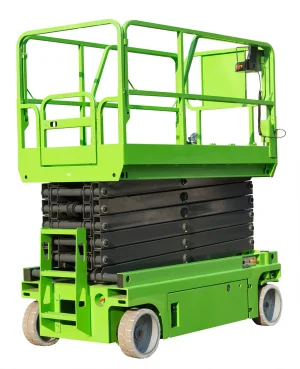
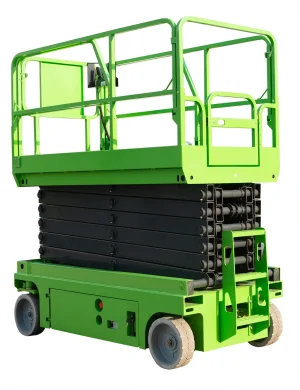
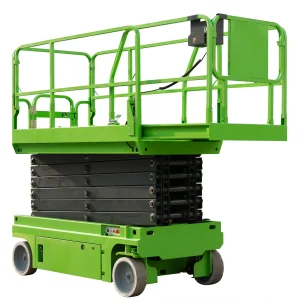
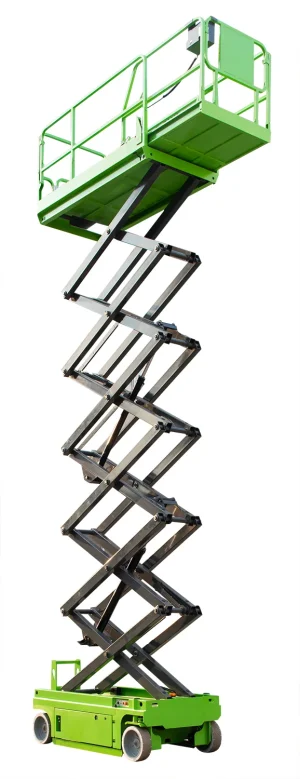
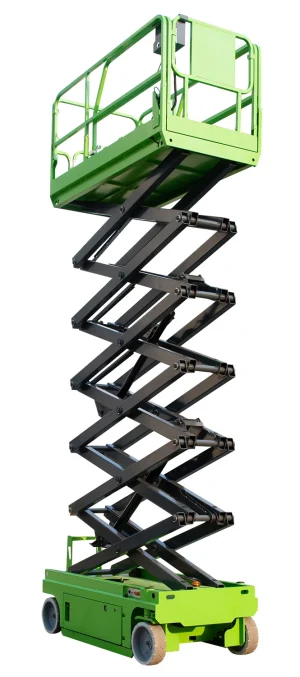
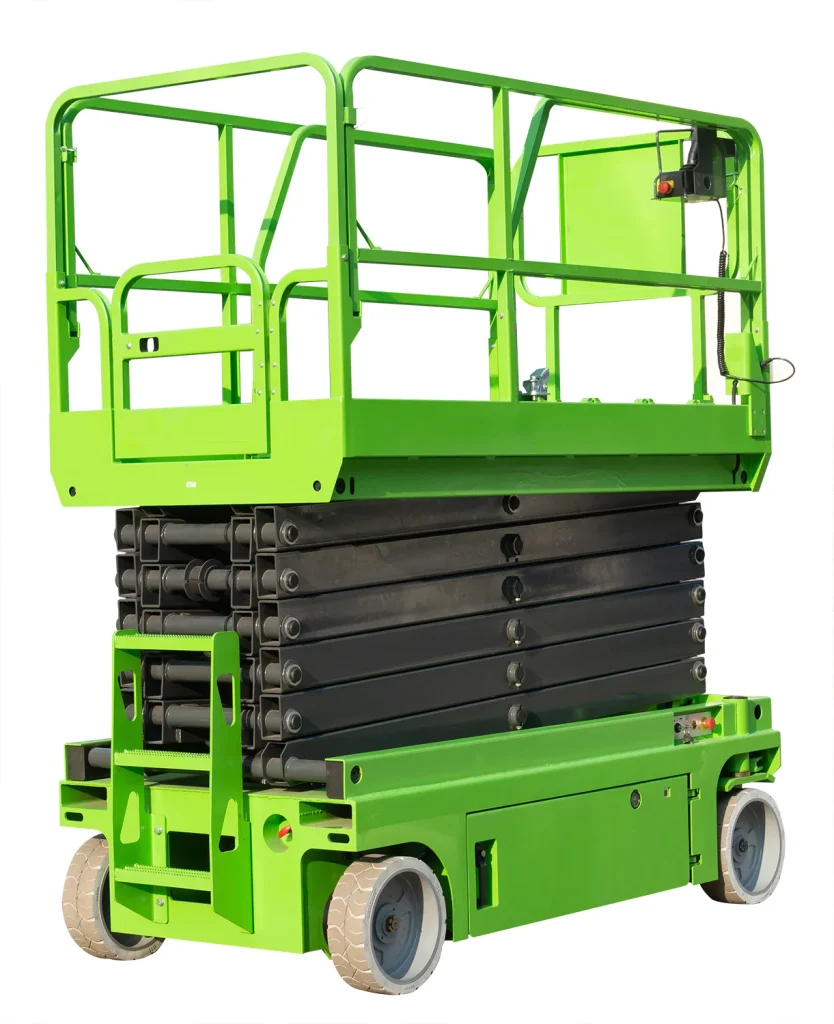
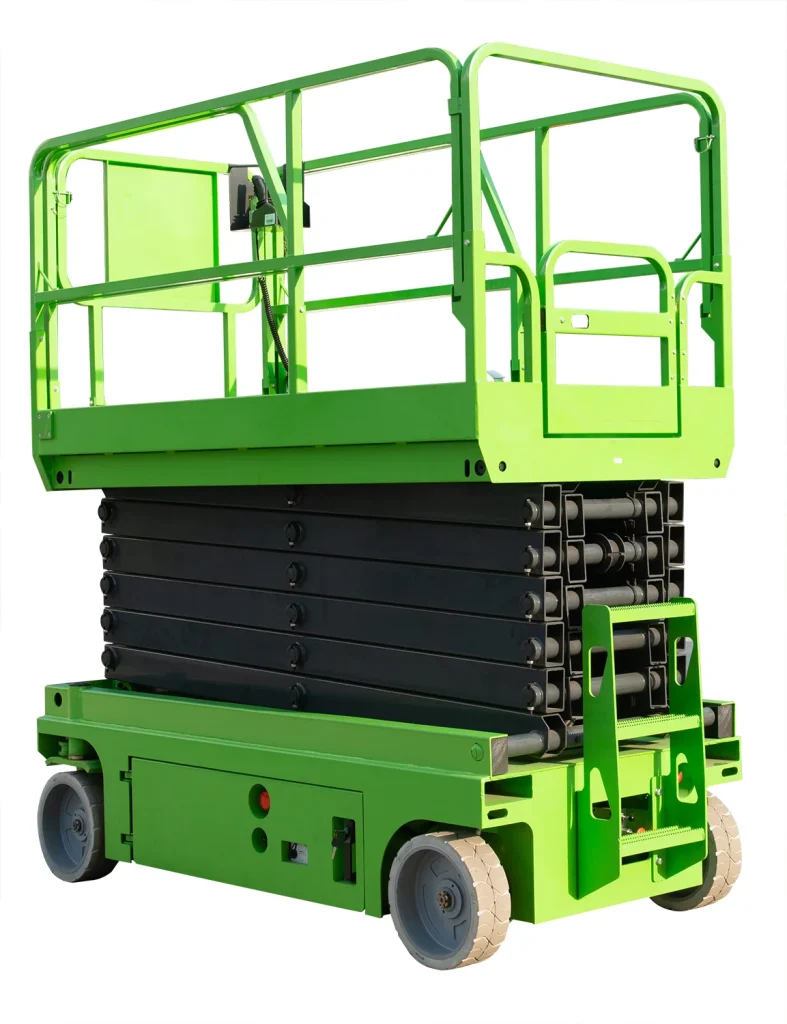
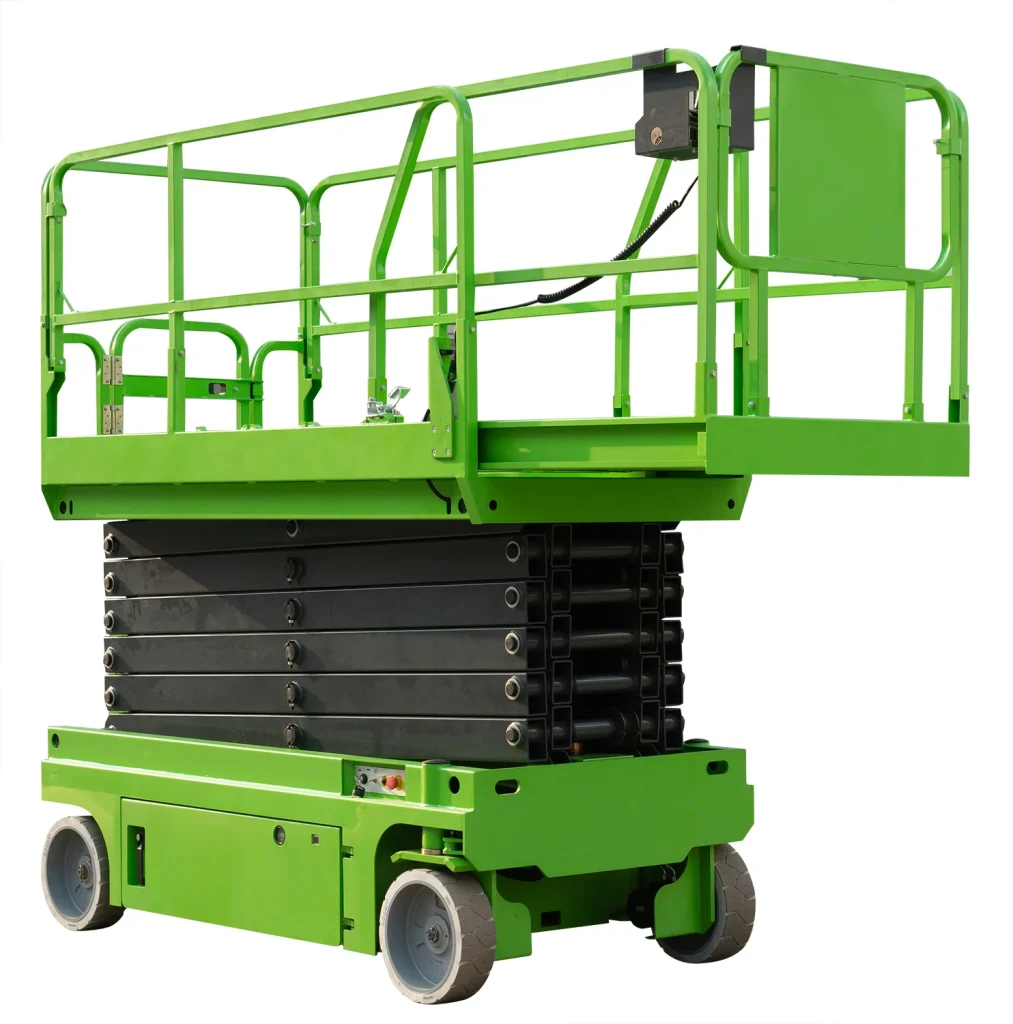
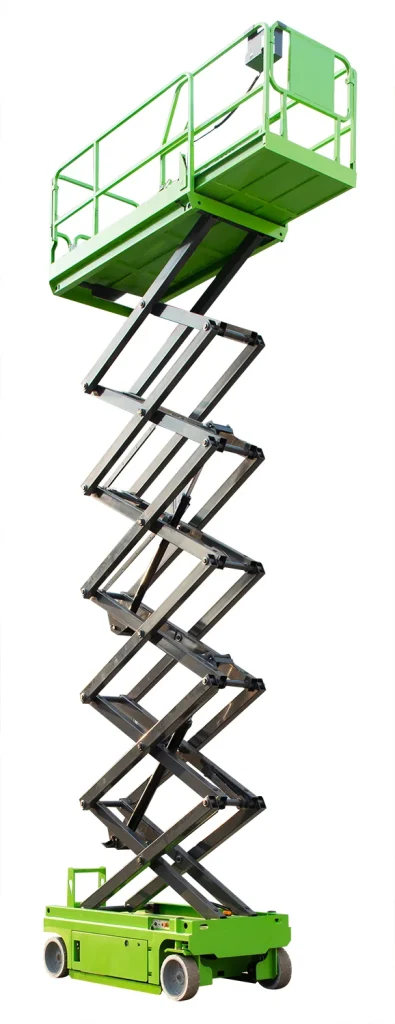
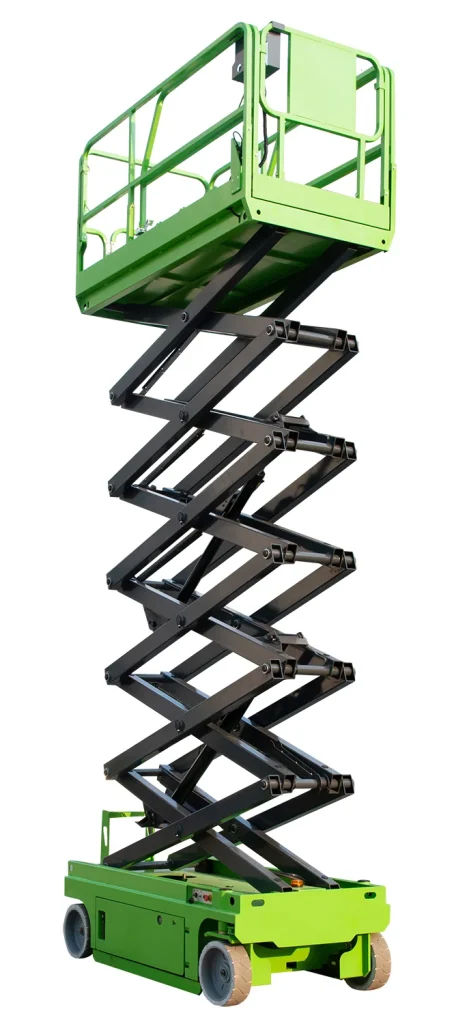
MX Series Self-Propelled Scissor Lift — MX1000S
The MX1000S reaches 11.80 m working height with 320 kg platform capacity on a 2.30×1.15 m deck. Asynchronous AC motor, zero inside turning radius, and drivable at full height — suited for large-scale industrial maintenance, infrastructure projects, and high-reach construction site operations.
Only if that phrase is clearly defined. “KC ready” might mean the supplier has CE documents that could support a KC application. It might mean the supplier has started the KC process but not completed it. It might mean nothing at all. Buyers should ask: What route has been confirmed? What evidence is already available? Which Korean approval steps remain? Who is the certificate holder? Has the factory been audited?
How long does KCs Type 1 certification take?
For a self-propelled aerial work platform from a Chinese manufacturer, the realistic timeline is 20–24 weeks: 2 weeks for route confirmation, 2 weeks for documentation review, 4 weeks for product testing, 4 weeks for factory audit scheduling and execution, 4 weeks for application review, and 4 weeks for certificate issuance. This assumes no documentation gaps or test failures. Do not promise delivery to your end customer until the timeline is validated.
What changed under KOSHA 2024 requirements?
Effective September 2024, KOSHA enhanced requirements for over-travel prevention devices, guardrail specifications, emergency rescue documentation, and lithium battery electrical safety. Equipment placed on the market after this date must comply with the new requirements. A KCs certificate issued before September 2024 may not cover the new requirements without update.
Can Chenlift support Korean certification preparation?
Chenlift can provide model-specific technical information, CE test reports as background evidence, product drawings, electrical and hydraulic schematics, factory test records, and identification plate samples for early review. Final Korean certification must be completed through the applicable local process with KTL, KTC, or KTR for the exact machine supplied.
What happens if the factory audit fails?
If a KCs Type 1 factory audit identifies non-conformities, the manufacturer must implement corrective actions and undergo a follow-up audit. This can add 4–8 weeks to the timeline. If critical non-conformities are found (e.g., missing quality system, no traceability records), the certification may be denied. Buyers should verify the manufacturer’s audit history before committing to a delivery timeline.
Is a KCs certificate transferable between importers?
Generally, no. The KCs certificate is typically issued to a specific applicant (the manufacturer or their authorized representative). If you buy through a trading company that holds the certificate, verify whether the certificate is transferable to your company or whether you need to apply for a new certificate. This is a common issue when switching suppliers or buying directly from the manufacturer after initially sourcing through a trading company.
Aerial work platform KC certification should be planned before production, not after shipment.
South Korean official verification: KOSHA&Safety Korea certification information portal
Chenlift (Suzhou) Machinery Co., Ltd. | No. 28 Yongchang Road, Xiangcheng District, Suzhou, Jiangsu, China | Aerial work platform manufacturer | IPAF Member (Manufacturer category)
For Korean market entry: model-specific technical documentation available on request. Final KC certification must be confirmed through applicable local process.