Aerial Work Platform
Supplier Brazil
Plataformas elevatórias CE certificadas para o mercado brasileiro — construção civil, indústria, infraestrutura e frotas de locação
Chenlift is the aerial work platform supplier Brazil’s distributors, rental fleets, importers and contractors buy from directly — CE-certified self-propelled scissor lifts, aluminium mast lifts, rough terrain MEWPs and high-reach boom lifts, shipped from our Suzhou factory to Santos.
HTJ Telescopic Boom
rough terrain sites
2026 — CBIC
EU 2006/42/EC
boom, lift table, dock, picker
experience
Suzhou, Jiangsu
system certified
Six Things Every Brazilian Buyer Weighs Up
Ground conditions, aisle width, heat, dust, emissions and the distance from Santos to site decide most first orders. Each one maps to a specific machine set.
Why Brazil’s Construction and Manufacturing Markets Demand Aerial Work Platform Suppliers
A Building Cycle Carried by Housing Finance and Large Works
Brazil’s construction sector is projected by CBIC to grow 1.2% in 2026, after 0.5% in 2025 — roughly 6% of national GDP and more than 3 million workers. The cycle is held up by two legs: housing finance and infrastructure. A record R$144.5 billion FGTS allocation is budgeted for 2026, and the Cities Ministry has signalled Minha Casa, Minha Vida could contract around 1 million homes in 2026. On the ground, São Paulo developers launched more than 15,000 new units in Q3 2026, and national cement consumption rose 2.3% in the first half (SNIC).
Interest rates remain the constraint — construction GDP dipped 0.4% q/q in Q2 on household deleveraging while still holding +1.1% y/y for the first half (IBGE). The sites that keep working are the ones with financing in place, and they all reach for powered access at structure, MEP and fit-out stages. Our construction & infrastructure access range covers the machine set for each stage.
An Automotive and Agribusiness Manufacturing Base That Works Indoors
Future Market Insights profiles Brazil as the second-fastest-growing aerial work platform market in the world — a 6.5% CAGR for 2026–2036, behind only Japan (8.5%) — against a global market of USD 12.3 billion in 2025. The recurring buyers sit in the ABC Paulista automotive cluster around São Paulo, in agribusiness processing plants across the interior, and in food and beverage production nationwide.
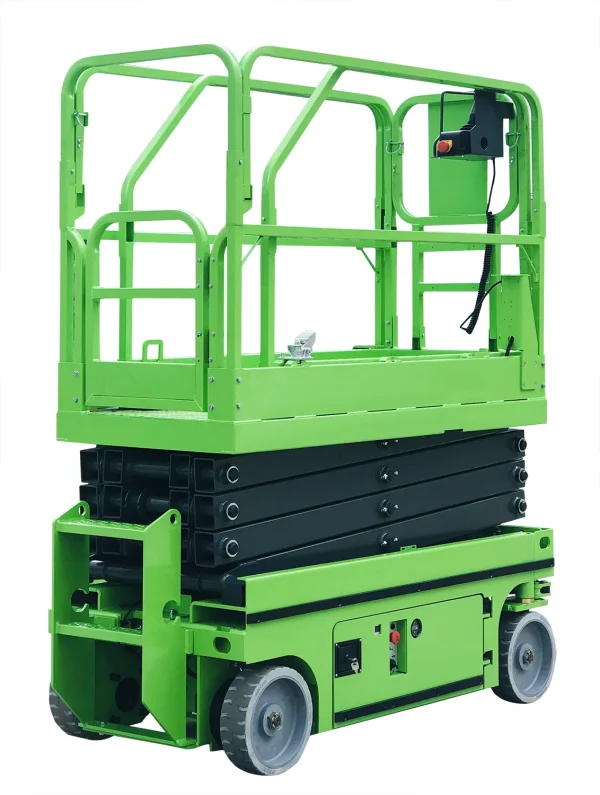
What decides the machine is the floor, not the factory size. Plant aisles are narrow, production cannot stop for access, and enclosed areas prohibit diesel exhaust. That makes compact electric scissor lifts and mast lifts the default — see the manufacturing & factory access range for the full machine set.
Infrastructure Led Construction Job Creation in 2026 — for the First Time on Record
In the first half of 2026, infrastructure was the construction segment that expanded employment the most — and for the first time since the Novo Caged series began in 2020, net job creation in infrastructure exceeded building construction (CBIC). Highway and bridge programmes, transmission works, and the logistics corridor around Santos and Paranaguá are where that labour is going.
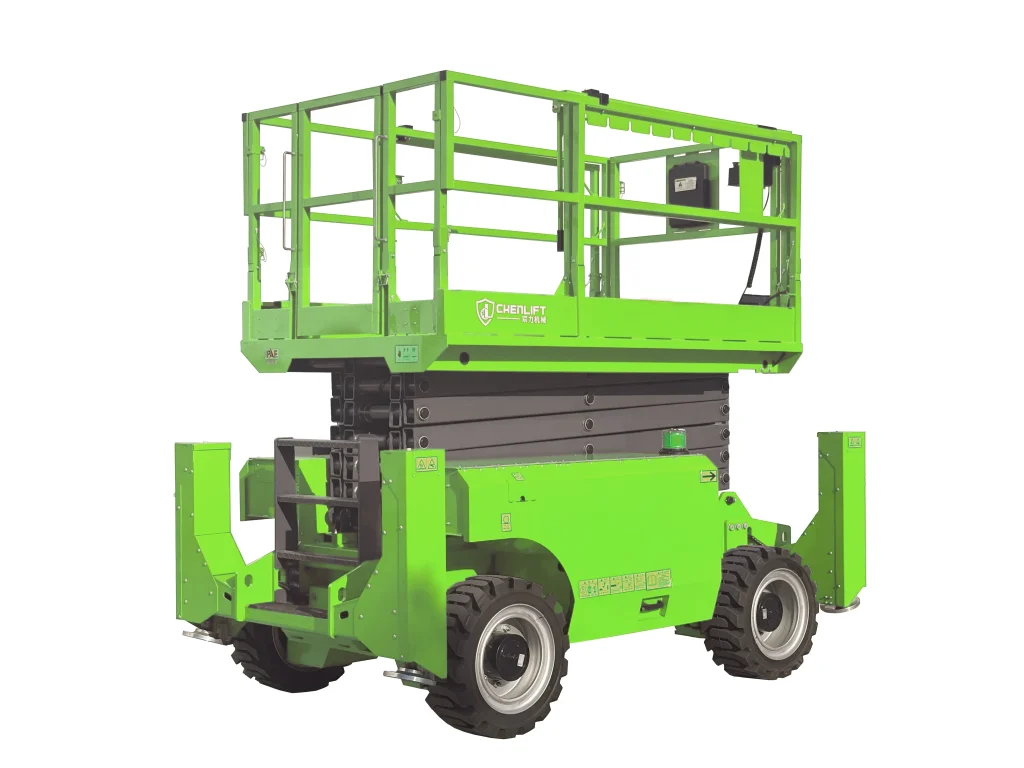
Outdoor work in Brazil is rough terrain work. Unfinished ground, ramps, seasonal rain and long distances between sites decide the machine: 4WD drive, high gradeability and automatic levelling outriggers are not options in this segment — they are the difference between a machine that works and one that sits on the lowboy.
Brazil’s AWP Market Grows Through Rental — and Rental Starts with an Importer
With Brazil’s aerial work platform market forecast to grow 6.5% a year to 2036 (FMI), most machines will reach end users through rental fleets and distributors rather than direct purchase. That makes the dealer and importer layer the part of the market that decides fleet quality — and the part Chenlift works with most directly.
Chenlift is an aerial work platform supplier Brazil’s dealers and importers buy from directly, with one factory for the full mix — indoor electric, rough terrain and high-reach lines. See how the rental fleet programme handles volume pricing, OEM branding and territory protection. Every dealer order ships with the documentation Brazilian contracts ask for: CE DoC, third-party test reports, Portuguese manuals and labels on request, and SGS / Bureau Veritas / TÜV pre-shipment inspection arranged before loading.

Aerial Work Platform Supplier Brazil: Indoor, Outdoor and High-Reach Equipment
Indoor electric machines for building fit-out and factories. Rough terrain and high-reach equipment for infrastructure and agribusiness. CE documentation confirmed per model, shipped directly from Suzhou.
| Your job | Machine set | Key specs |
|---|---|---|
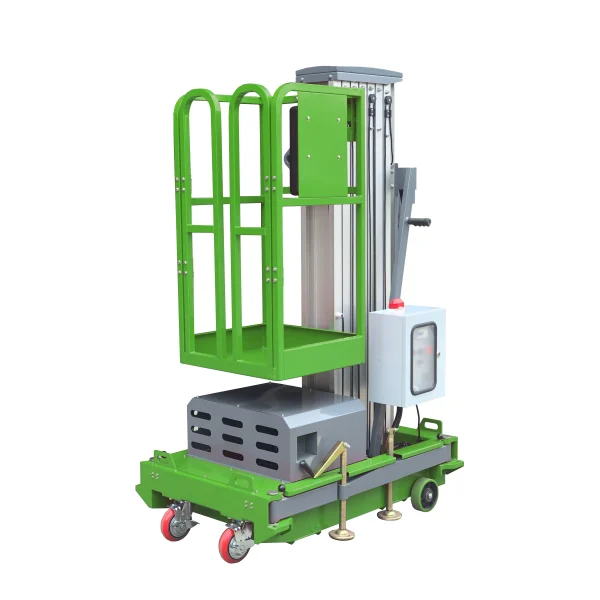
| Building fit-out & MEP — malls, hospitals, office towers | MX scissor + ME mast | 8–14 m · electric · zero turning radius |
| Plant floor & assembly lines — automotive, food, beverage | MX / MX Mini | 7.8–17.8 m · 760 mm width option |
| Warehouses & logistics centres | MK push scissor | 8–18 m · 500–1,000 kg |
| Highway, bridge & structural steel | MRT rough terrain + HTJ telescopic | 10–18 m / up to 48 m · 4WD |
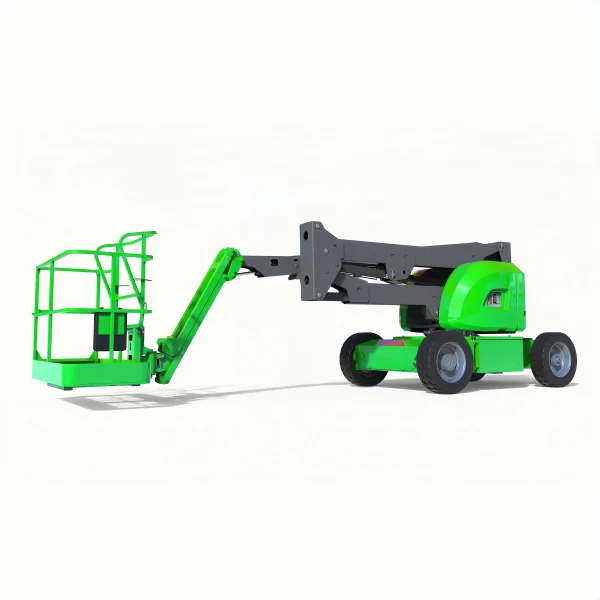
| Solar parks, cane & ethanol plants | MRT + HAJ articulating | 45% gradeability · up to 40 m · 360° |
| Mixed rental fleet — typical first order | MX · ME + MRT + HTJ / HAJ | one shipment · parts kit included |
Six job types cover most first orders from Brazil. Match your work to a machine set before requesting a quotation — the specification conversation gets much shorter.

| Working height | 5.8 – 17.8 m |
| Platform capacity | 227 – 320 kg |
| Drive | 4 × 6V battery · electric |
| Gradeability | 25% |
| Turning radius (inside) | 0 m |
| Certification | CE · ISO 9001 |

| Working height | 8 – 12 m |
| Platform capacity | 125 kg |
| Mast | Single aluminium |
| Drive | Manual / electric lift |
| Certification | CE |
| Working height | 8 – 18 m |
| Platform capacity | 500 – 1,000 kg |
| Power | AC / DC |
| Drive | Manual push |
| Certification | CE |

| Working height | 10 – 18 m |
| Platform capacity | 345 – 567 kg |
| Drive | 4WD electric / diesel |
| Gradeability | up to 45% |
| Outriggers | Automatic levelling |
| Certification | CE · Kubota/Yanmar |

| Working height | 16.7 – 48 m |
| Platform capacity | 230 – 480 kg |
| Drive | 4WD diesel |
| Rotation | 360° continuous |
| Engine | Kubota / Yanmar / Cummins |
| Certification | CE |

| Working height | up to 40 m |
| Platform capacity | 230 – 480 kg |
| Drive | 4WD diesel / electric |
| Rotation | 360° continuous |
| Engine | Cummins / Kubota |
| Certification | CE |
For loading bays and dock areas, ask about dock levelers and mobile dock ramps — quoted together with access equipment.
Chenlift in Brazil
Chenlift sells direct from the factory to established Brazilian distribution and rental partners. Importers, rental fleets and material handling companies buy from an aerial work platform supplier Brazil’s construction, warehouse and infrastructure projects depend on. Partner names are withheld on request; named references are available under NDA.
What Brazilian Buyers Get From Chenlift — Aerial Work Platform Supplier Brazil
Brazilian Power and Site Conditions, Built Into the Order
Two configuration questions come up on almost every Brazil order. Both are settled at quotation stage — a charger or a seal kit changed after the machine lands costs more than one specified correctly at the factory.
Certification and Standards for the Brazilian Market
Brazil operates no mandatory product certification programme for aerial work platforms equivalent to CE. ABNT NBR 16340 is the national MEWP design standard — voluntary, and the reference Brazilian project specifications and insurers cite when they assess equipment. CE documentation against EN 280-1:2022 — the current harmonised European MEWP standard, aligned with ISO 16368:2024 — satisfies commercial acceptance for most Brazilian project and insurance purposes.
The obligations that are mandatory sit with the machine owner, not the importer: NR-12 (machinery and equipment safety, consolidated by SEPRT Ordinance 916/2019 and amended by MTE Ordinance 344/2024), NR-18 (construction site conditions) and NR-35 (work at height) require maintenance records, inspections and operator controls on site. NR-12 also requires operating documentation in Portuguese for the people running the machine — Portuguese manuals, safety labels and maintenance guides are available with every Brazil order, which is what your safety team needs to open that file. Confirm project-level requirements with your compliance team before committing.
What It Costs to Land a Machine in Brazil
Importing into Brazil stacks federal and state taxes on the customs value, plus freight and customs charges. 2026 is a trial year for the CBS/IBS reform — the symbolic 0.9% and 0.1% appear on invoices, payment is waived for compliant taxpayers, and PIS/COFINS, IPI and ICMS still apply in full. From 1 January 2027 the federal side changes over. Rates below are indicative; confirm the 8-digit NCM code and current rates on SISCOMEX with your customs broker before filing.
| Cost component | Calculation base | Typical range (2026) |
|---|---|---|
| Import Duty (II) | CIF value | 0–35% by NCM (Mercosur TEC); machinery commonly mid-teens — 14% typical for NCM 8427.20 / 8428.90 |
| IPI (federal excise) | CIF + II | 0–50% by TIPI code |
| PIS / COFINS-Import | Customs value | 11.75% combined standard (PIS 2.1% + COFINS 9.65%) |
| ICMS-Import (state) | CIF + II + IPI + PIS/COFINS, grossed up (“por dentro”) | 17–20% by state — São Paulo 18% |
| AFRMM (merchant marine surcharge) | Ocean freight | 25% of sea freight (8% intra-Mercosur) |
| SISCOMEX fee | Per import declaration | R$185 first NCM item + R$29.50 each additional |
Illustrative example — not a quote. On a US$100,000 CIF shipment, assuming II 14%, IPI 5%, PIS/COFINS 11.75% and ICMS 18% (São Paulo): II US$14,000 + IPI US$5,700 + PIS/COFINS US$11,750 + ICMS US$28,855 ≈ US$60,300, about 60% of CIF. AFRMM is charged on the freight portion and the SISCOMEX fee per declaration on top. Your broker’s numbers govern.
What changes on 1 January 2027. PIS/COFINS-Import is abolished and CBS takes its place at the full reference rate — around 8.8%, with the exact figure fixed by Federal Senate resolution each year. IPI drops to zero on most goods, including this equipment. IBS stays at 0.1% through 2028, and ICMS does not move before 2029.
The CBS/IBS base is the customs value plus import duty, Siscomex fee, AFRMM and any anti-dumping or safeguard duty — IPI and ICMS sit outside it. For an aerial work platform importer the net effect is usually a modest reduction: roughly 8.8% CBS replaces 11.75% PIS/COFINS, and 5% IPI disappears. Model both years before you price a delivery that lands after the turn of the year.
Cash flow, not just the rate. ICMS and PIS/COFINS are recovered downstream by a properly registered importer; II and IPI generally stay in cost. Under CBS/IBS the credit is broader — companies in the regular regime take a full credit for CBS and IBS paid on import (Complementary Law 214/2025, art. 78). Budget the full amount at the port and model the recovery with your accountant.
The reform changes the stack from 2027. 2026 is the trial year (CBS 0.9% / IBS 0.1% reported, payment waived). From 1 January 2027 PIS/COFINS-Import is abolished and IPI drops to zero for most goods; ICMS stays until it phases out between 2029 and 2033. If you are planning fleet purchases across years, model 2027+ imports on the new stack. The importer of record needs RADAR / SISCOMEX registration to import at all — Chenlift supplies the NCM guidance, CE DoC, test reports and shipping documents that registration and clearance require.
Common Questions from Brazil Buyers
Related Solutions & Markets
Request a Supply Quotation for Brazil
Contact Chenlift with your model requirements, quantities, destination port and delivery timeline. The team will provide a landed-cost quotation with the full duty breakdown and advise on the right product configuration — construction site fleet, manufacturing plants, infrastructure, or mixed rental fleet.