Inside Chenlift
Where Every
Platform
Is Born.
A guided look at the production processes, quality controls, and specialist workshops that transform raw steel and hydraulic components into the lift platforms operating in over 80 countries.
The Facility
15,000 m² Dedicated
to Getting Lifts Right
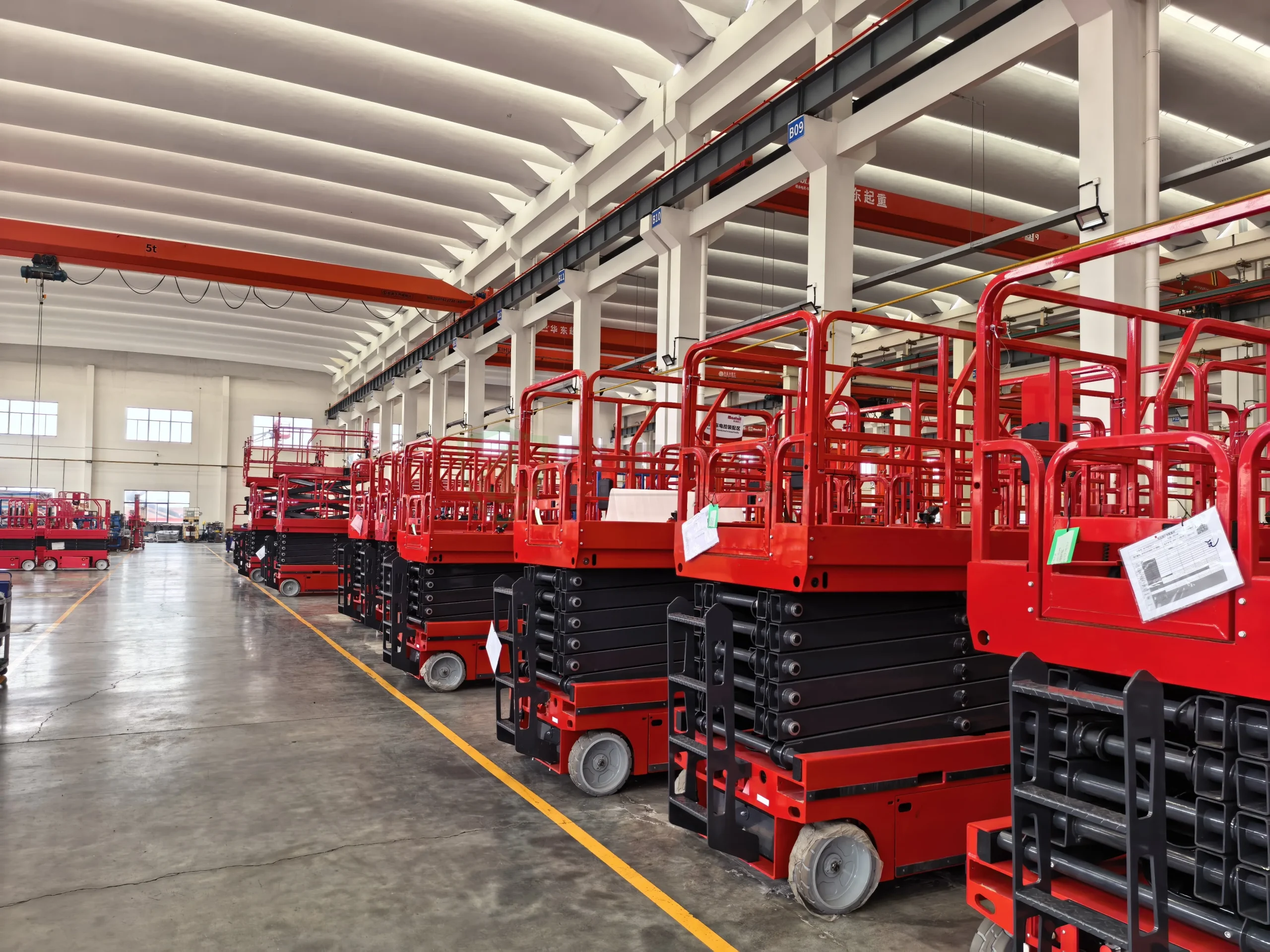
Chenlift’s aerial work platform manufacturer factory in Suzhou, Jiangsu is designed specifically for the demands of aerial work platform production: high-bay ceilings for large platform assemblies, reinforced floor slabs for load-testing, and dedicated ventilation zones for painting and surface-treatment operations.
From customer requirements and production task orders through to fabrication, assembly, testing and dispatch, work moves through defined stations with a responsible team at each stage. Production and inspection documentation follows the task order throughout the process.
How a Chenlift Is Made
One Task Order.
Ten Accountable Stages.
Every lift begins with a confirmed customer requirement and moves through a defined production route. The work order follows the job across the factory, with a responsible team at every station.
-
01
Order entry
Customer Requirement Confirmation
Customer requirements, configuration, delivery expectations and requested inspection arrangements are confirmed before the job is released for production.
Responsible: Sales & Technical Coordination -
02
Production release
Production Work Order
The production department receives the task order and uses it to organize the manufacturing route, workshop handover and production schedule.
Responsible: Production Planning -
03
Material preparation
Warehouse Material Issue
The warehouse prepares and issues materials against the production task order before fabrication begins.
Responsible: Warehouse Team -
04
Structural fabrication
Cutting & Fabrication
Material moves into fabrication for cutting and the manufacture of the components needed for the lift structure.
Responsible: Fabrication Workshop -
05
Structure build
Welding & Structural Preparation
Fabricated parts are welded and prepared as structural assemblies before they move into the surface-treatment process.
Responsible: Welding Workshop -
06
Finish protection
Surface Treatment
Structural components enter the automated treatment and coating line. The complete 20-stage route is shown in detail below.
Responsible: Surface Treatment Team -
07
Build completion
Final Assembly
In the assembly workshop, mechanical components are brought together with electrical and hydraulic systems for final assembly.
Responsible: Assembly Workshop -
08
Performance validation
Commissioning & Load Testing
Completed machines undergo functional commissioning and load testing before entering the final quality-control stages.
Responsible: Commissioning & Test Team -
09
Quality gate
Quality Inspection
Quality personnel carry out the applicable process and finished-machine checks, recording inspection results against the production documentation.
Responsible: Quality Control -
10
Shipment release
Final Inspection, Packing & Dispatch
After final inspection, the machine is packed and prepared for dispatch in line with the confirmed order and shipment requirements.
Responsible: Quality, Packing & Logistics
Surface Treatment Process
From Shot Blasting
to Powder Coating
After fabrication, structural components move through a continuous sequence of mechanical preparation, cleaning, conversion treatment, electrophoretic coating, powder coating and curing.
- Material
Ready - Shot
Blasting - Pre-
Degreasing - Wash
- Main
Degreasing - Slot
Dipping - Ceramic
Conversion - Pure Water Rinse 1
(Soak) - Pure Water
Rinse 2 - Electrophoretic
Coating - UF1
(Soak) - Spray
UF2 - Pure Water
Rinse - Air
Blow-Off - E-Coat
Baking - Controlled
Cooling - Powder
Coating - Curing
- Natural Air
Cooling - Unloading
Shot Blasting
The process starts with shot blasting after weld finishing, preparing the structural component for the treatment stages that follow.
Cleaning & Rinsing
Pre-degreasing, water rinsing and main degreasing remove process residue before the conversion stage.
Ceramic Conversion
An immersion stage and ceramic conversion coating prepare the metal surface for the following coating layers.
E-Coat
After purified-water rinses and UF rinse stages, electrophoretic coating is baked and allowed to cool in a controlled sequence.
Powder & Curing
Powder coating follows e-coat cooling. The component then moves through curing, natural-air cooling and unloading.
Inspection Evidence
Quality Checks
Have Their Own Record.
Inspection is not a final-photo gallery. These reserved positions will show the actual evidence from the checkpoints that support the production task order.
Process Check
Evidence from an applicable production-stage inspection.
Function & Load Test
Evidence from commissioning and load-test activities.
Final Quality Check
Evidence from finished-machine inspection before packing.
Customer Inspection
Evidence from an arranged customer or appointed-inspector visit.
Inspection Arranged to Customer Requirements
Customer-appointed inspection agencies, including SGS, Bureau Veritas and TUV, can be accommodated on request at applicable inspection points. CE Declaration of Conformity documentation is managed separately from third-party inspection arrangements.
Quality System
Built-in Quality,
Not Bolted-on.
Our ISO 9001:2015 certified quality management system reaches into every department, not just the inspection bay.
ISO 9001 : 2015
Independently audited and certified. From supplier qualification to customer complaint resolution, every process is documented, measured, and subject to continuous improvement review cycles.
CE Declaration of Conformity
All standard-range products carry CE marking under the EU Machinery Directive 2006/42/EC. Technical construction files are maintained and export documentation prepared with every qualifying shipment.
Third-Party Inspection
We work openly with BV, SGS, and customer-appointed inspection agencies. Production schedule and inspection zone are arranged to support pre-shipment inspection visits and witnessed testing on request.
Plan Your Visit
Come and See
for Yourself
We welcome distributor visits, end-user delegations, and third-party auditors to our Suzhou facility. Factory tours cover the main production areas and typically take approximately 90 minutes. On-site meeting facilities are available for product specification discussions and commercial negotiations.
Address: No. 28 Yongchang Road, Xiangcheng District, Suzhou, Jiangsu, China 215000
Nearest Airport: Shanghai Hongqiao International Airport — approx. 25 min by high-speed rail
High-Speed Rail: Suzhou Station
Email: sales@chinaliftplatform.com
Next Step