You have identified the right machine. The specifications match your project requirements. The price is agreed. Then your Saudi customs broker asks a single question: does this shipment have both a PCoC and an SCoC in the SABER system? This guide is written specifically for buyers sourcing a SASO aerial work platform from China.
If you are importing aerial work platforms, scissor lifts, vertical mast lifts, or boom lifts into the Kingdom of Saudi Arabia and are unfamiliar with SABER, this guide covers everything you need to know — what the program requires, how the two-certificate system works, which technical regulation applies to lifting equipment, what documents you need to prepare, and where the process most commonly breaks down.
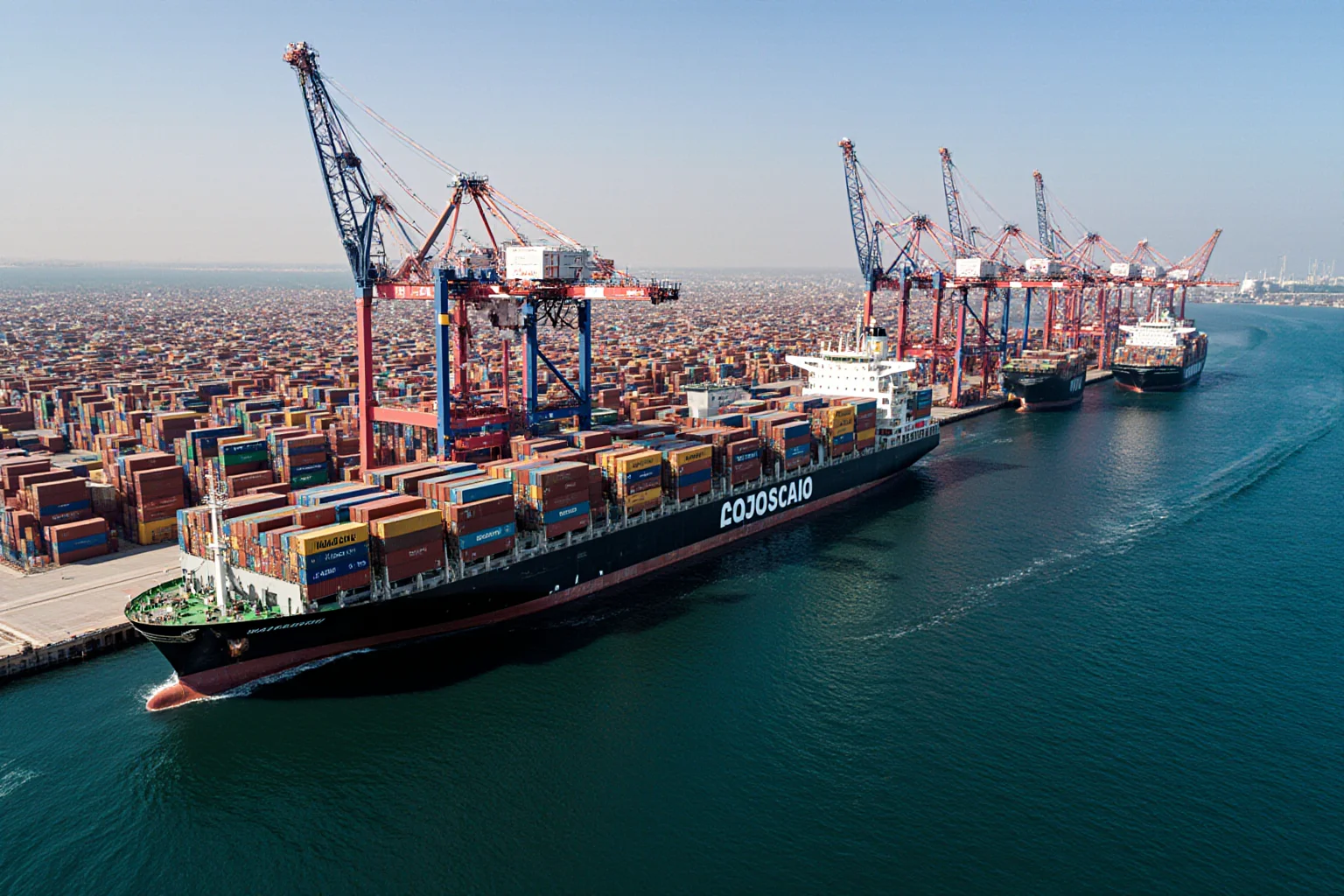
SASO aerial work platform import clearance at Saudi Arabia port under SABER certification requirements
What SABER Is and Why It Exists
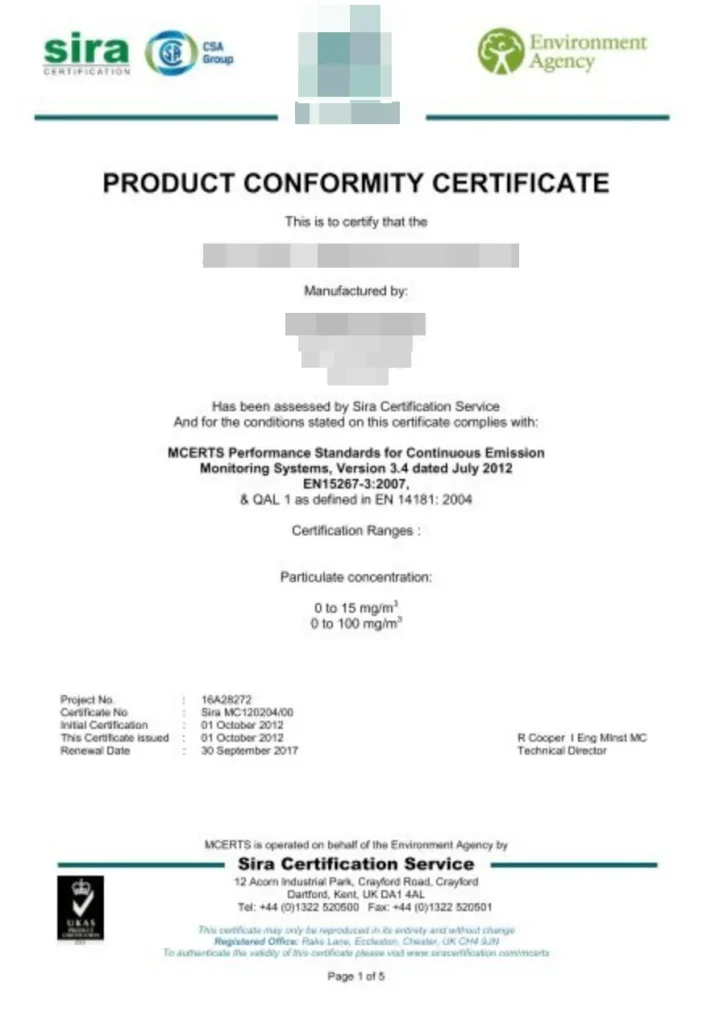
SABER Product Certificate of Conformity PCoC required for SASO aerial work platform import into Saudi Arabia
Any SASO aerial work platform imported into the Kingdom must be registered and certified through the SABER platform before arrival.. Established under the national SALEEM product safety initiative, SABER replaced the previous paper-based certificate of conformity and pre-shipment inspection system. Its purpose is to ensure that all products entering the Saudi market meet applicable safety standards and technical regulations before they arrive, not after.
The platform integrates directly with Saudi Customs through the FASAH system. When a shipment arrives at a Saudi port, customs authorities verify the SABER certificates electronically. There is no manual review pathway and no alternative clearance route. If the required certificates are not present and valid in the SABER system at the time of arrival, the shipment will be held.
SABER covers both regulated and non-regulated products. Aerial work platforms — including scissor lifts, vertical mast lifts, and boom lifts — are regulated products. They fall under a specific SASO technical regulation for lifting equipment, which means the certification requirements are more detailed than for non-regulated goods.
The 2025 Regulatory Change Every Importer Must Know
From January 1, 2025, SASO implemented mandatory dual-certificate requirements for all regulated products. Two certificates are now required for every shipment:
Product Certificate of Conformity (PCoC): Issued once per product model, valid for one year. Confirms that the specific model complies with the applicable SASO technical regulation. The PCoC is issued by a SASO-accredited Conformity Assessment Body (CAB) after reviewing the technical documentation for that model.
Shipment Certificate of Conformity (SCoC): Required for every individual shipment, regardless of how many times the same product has been imported before. The SCoC confirms that the specific goods in that consignment match the certified product specification. It is issued after the PCoC is in place and must be obtained before the shipment departs — not after arrival.
Two practices that were previously accepted are no longer valid under the 2025 rules:
Undertaking Letters — previously used as a temporary clearance mechanism — are no longer accepted by Saudi Customs under any circumstances.
Post-arrival SCoC applications — applying for the shipment certificate after goods have already reached a Saudi port is explicitly prohibited. Any SCoC application submitted after arrival is considered invalid, and the shipment will face detention, penalties, or forced re-export.
The practical implication: the SABER process must start well before the goods leave the factory. Buyers who treat SABER as a formality to complete during shipping are operating under rules that no longer apply.
The Technical Regulation That Applies to Aerial Work Platforms
Not all machinery falls under the same SASO requirements. Aerial work platforms are regulated under SASO Technical Regulation for Machinery Safety — Part 3: Lifting Equipment (Reference: 01-05-21-182). This regulation was implemented by SASO to ensure that all lifting machinery and accessories meet essential health, safety, and environmental requirements before being placed in the Saudi market.
The regulation applies to the full range of lifting equipment relevant to Chenlift’s product lines: self-propelled scissor lifts, push-around vertical mast lifts, drivable mast lifts, articulating boom lifts, and telescopic boom lifts. Dock levellers and lift tables fall under related machinery safety provisions.
Under this technical regulation, suppliers are required to:
Conduct and document a risk analysis demonstrating that health and safety requirements have been identified and addressed in the machine’s design and manufacture
Provide a technical file covering the machine’s design, construction, and operating parameters
Submit a Declaration of Conformity referencing the applicable standards
Ensure product labelling meets SASO requirements, including Arabic-language text
The conformity assessment procedure applicable to mobile machinery and heavy-duty equipment under this regulation is Type 1a — which requires standard documentation review by a SASO-accredited certification body, rather than physical product testing or factory audit for most standard configurations. This is an important distinction: for most Chenlift aerial work platform models, the SABER application is a documentation-based process, not a physical inspection process.
How the SABER System Works: Two Certificates, Two Stages
Understanding the structure of SABER prevents the most common timing mistakes buyers make.
saber-logo
Stage 1: Product Registration and PCoC
The importer registers the product in the SABER platform using the correct HS code for the machine type. The system categorizes the product and identifies which technical regulation applies. For aerial work platforms, this links to the Lifting Equipment regulation.
Once the product is registered, the importer selects a SASO-accredited Conformity Assessment Body from the list approved for that product category. The CAB reviews the technical documentation submitted for that specific model. If the documentation meets the requirements of the applicable technical regulation, the CAB issues the PCoC, which is valid for one year from the date of issue.
One PCoC covers one product model. If you are importing three different scissor lift models, three separate PCoCs are required. The PCoC does not need to be renewed for every shipment — it remains valid for the year and can be used for multiple SCoC applications during that period.
Stage 2: Shipment Certificate (SCoC)
Once valid PCoCs are in place for all product models in a planned shipment, the importer requests the SCoC through the SABER platform. The SCoC links the specific shipment — identified by the bill of lading and shipping documents — to the approved product certifications. This certificate is per shipment, not per product, and expires with that consignment.
As of September 15, 2025, an additional requirement applies to certain HS codes: a declaration approved by the Ministry of Industry and Mineral Resources must accompany the SCoC request. Importers shipping Chenlift equipment into Saudi Arabia should confirm with their certification agent whether this requirement applies to the specific HS codes in their shipment.
The SCoC processing time is typically 2–3 days once all documentation is in order. The PCoC process takes 10–14 days for a complete first submission, or 3–5 days if all documentation is accurate and complete on first submission.
What Documents Are Required
The document package for an aerial work platform SABER application covers both company credentials and product-specific technical documentation.
Company documents:
Active SABER account registered under the importing entity
Business licence of the Saudi importing company
ISO 9001 certificate from the manufacturer (Chenlift holds ISO 9001 certification), or an environmental assessment report
Product technical documents:
Product specification datasheet for the specific model being imported, including all key parameters (working height, platform capacity, machine weight, power source, dimensions)
Risk assessment documentation as required under the Lifting Equipment technical regulation
Declaration of Conformity referencing the applicable SASO standards
Clear photographs of the product label, showing: product name, model number, trademark, manufacturer name and address, “MADE IN CHINA” marking, barcode, dimensions, material composition, and batch number
Arabic-language version of all label text — this is a mandatory SASO requirement and one of the most commonly missed items in first-time applications
Clear photographs of the machine barcode or QR code
Multiple photographs of the machine showing its physical appearance and features from different angles — one complete set per model
Brand trademark/logo image file
Packaging label photographs for outer carton and inner packaging where applicable
On labelling: The physical machine label must carry both English and Arabic text before the machine is shipped. This is not a documentation requirement — it is a physical product requirement. Preparing correct bilingual labels at the manufacturing stage, not after the fact, is essential. Label corrections after production create significant delays and potential re-export scenarios.
How Chenlift Supports the SABER Application
SABER certificates are issued under the importer’s account and are specific to each buyer. Chenlift does not hold SABER certificates centrally — the certificates belong to the Saudi importer who placed the order. This is a fundamental difference from CE certification, where Chenlift holds certificates covering its product lines as the manufacturer.
What Chenlift provides in support of the SABER process:
Full technical documentation for the specific models being ordered, formatted to meet the requirements of the Lifting Equipment technical regulation
Product specification sheets, risk assessment references, and Declaration of Conformity documentation
Product photographs in the required formats and angles
Bilingual (English and Arabic) label content for the specific models ordered
Coordination with an accredited third-party certification agent who manages the SABER platform submission on behalf of the importer
The practical workflow:
Buyer provides their SABER account details and business licence
Buyer confirms the specific models and quantities being ordered
Chenlift prepares and provides the complete manufacturer documentation package
The accredited certification agent, working with Chenlift, submits the PCoC application through the buyer’s SABER account
Upon PCoC approval, the SCoC is requested ahead of shipment
The buyer pays the certification fee — the fee structure depends on the number of models and the accredited body selected
Certificates are issued in the buyer’s SABER account and the shipment proceeds
The buyer does not need to navigate the SABER platform directly. The process is managed by Chenlift and the certification agent. However, the SABER account and the certification fee must be in the buyer’s name — these cannot be transferred or substituted.
Where SABER Applications Most Commonly Fail
Understanding the failure points is the most practical thing an importer can do before starting the process.
Missing or incorrect Arabic labelling. SASO requires Arabic text on the physical product label. Applications submitted without confirmed Arabic label content, or with a translation that does not match the physical label on the machine, are rejected at the documentation review stage. This is the single most common cause of first-submission rejection for Chinese-manufactured machinery.
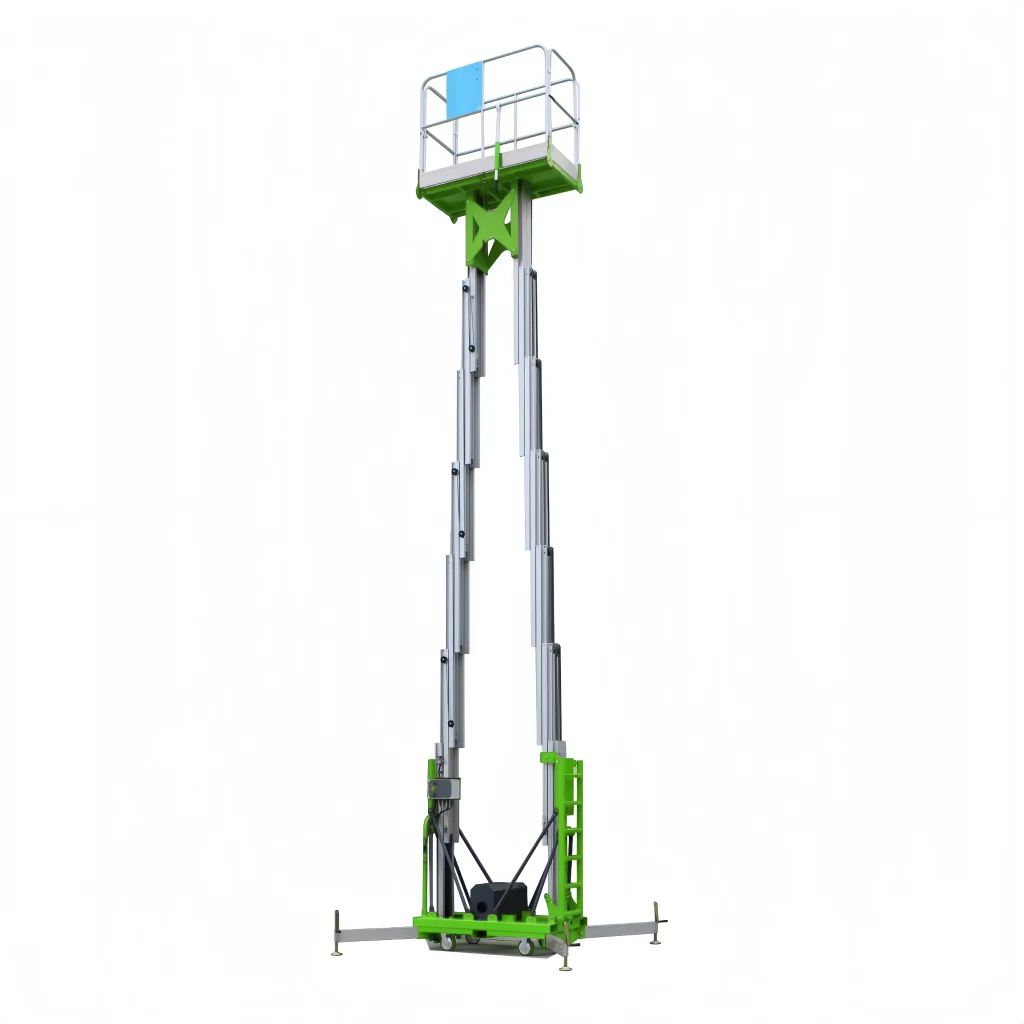
Double Mast Mobile Vertical Lift
Mismatched product descriptions. The product description, model number, and specifications on the invoice, the shipping documents, and the SABER registration must be identical. Any discrepancy between the commercial invoice and the SABER product registration — a model number difference, a capacity figure that doesn’t match, a weight figure from an older datasheet — triggers a review and typically a rejection requiring resubmission.
PCoC tied to the wrong importer. A PCoC is issued under the name of a specific Saudi importing entity. It cannot be transferred to a different importer, even for the same product model. If an end buyer changes their purchasing structure, or if a distributor tries to use a certificate originally issued for a different company, a new PCoC application is required.
SCoC applied for after arrival. Under 2025 regulations, this is an absolute barrier. No post-arrival SCoC is accepted. Shipments that arrive without a valid SCoC will be detained. Detention fees, port storage charges, and potential re-export costs fall entirely on the importer. Starting the SABER process at the time of order confirmation — not at the time of shipment booking — is the only way to avoid this scenario.
Expired PCoC. The PCoC is valid for one year. An SCoC cannot be issued against an expired PCoC. Importers with recurring orders need to track PCoC expiry dates and initiate renewal applications before the certificate lapses, not after.
Incomplete technical file for machinery. Unlike consumer products, machinery classified under the Lifting Equipment technical regulation requires a risk assessment document as part of the technical file. Applications submitted without this documentation, or with a risk assessment that does not reference the applicable SASO standards, require supplementary submissions before the PCoC can be issued.
SABER vs CE: Understanding the Difference
Buyers who have previously sourced equipment with CE certification sometimes assume that CE compliance simplifies or replaces the Saudi SABER process. It does not, but CE documentation is useful.
CE certification under the EU Machinery Directive confirms that a product meets European safety requirements. Chenlift products carry CE certification issued by UDEM International Certification under EU Machinery Directive 2006/42/EC and EMC Directive 2014/30/EU. This certification includes a Declaration of Conformity, technical file, and harmonised standard compliance documentation — material that is directly relevant to the SABER technical documentation requirement.
However, CE certification does not satisfy the SABER PCoC requirement. The PCoC must be issued by a SASO-accredited Conformity Assessment Body against the applicable SASO technical regulation. The existing CE technical file accelerates the SABER documentation preparation because the underlying engineering data is already compiled and verified — but the Saudi certification process is a separate formal step that must be completed independently.
Do I need a SABER certificate for every shipment, or just the first one?
Both certificates apply to every import transaction, but they work differently. The PCoC is issued once per product model and is valid for one year — it covers multiple shipments of the same model during that period. The SCoC is required for every individual shipment, without exception. Each time you import, even for the same model under a valid PCoC, a new SCoC must be obtained before the shipment departs.
Can the same SABER certificate be used by two different Saudi importers?
No. The PCoC is issued under the name of a specific Saudi importing entity and cannot be shared, transferred, or reused by a different company. If two distributors are both importing the same Chenlift model, each requires their own PCoC. This is by design — SABER ties product conformity accountability to the specific party responsible for placing the goods in the Saudi market.
How far in advance should I start the SABER process?
For a first-time application on a new product model, allow a minimum of 3 weeks from the start of document preparation to having a valid PCoC in place, assuming there are no documentation issues requiring resubmission. In practice, 4–5 weeks is a safer timeline for first applications. For subsequent shipments of already-certified models, the SCoC can typically be obtained within 3–5 business days once the PCoC is confirmed valid. Build SABER timelines into your purchase order process, not your logistics process.
What happens if my PCoC expires before I import again?
An expired PCoC cannot be used to obtain an SCoC. You must submit a PCoC renewal application and receive a new certificate before the next shipment can proceed. Renewal applications typically process faster than first-time applications if the product has not changed, but they cannot be initiated retroactively. Track PCoC expiry dates as part of your Saudi import compliance calendar.
Is there a list of SASO-accredited certification bodies I can use?
Yes. SASO publishes and updates the list of accredited Conformity Assessment Bodies authorised to issue PCoCs for specific product categories on the official SABER platform (saber.sa). The list of approved bodies for machinery and lifting equipment changes periodically. Chenlift works with an accredited certification agent with active approval status — confirm current accreditation status at the time of application, not based on historical approvals.
SASO Aerial Work Platform Models Eligible for SABER Certification
Every SASO aerial work platform listed below can be registered through SABER under the Lifting Equipment technical regulation. All Chenlift aerial work platform product lines can be registered through SABER under the Lifting Equipment technical regulation, including:
MX Series — Self-propelled electric scissor lifts (working heights 5.8m–17.8m, platform capacity up to 320kg)
MK Series — Manual push scissor lifts
ME / DM Series — Push-around vertical mast lifts, single and double mast configurations
MD Series — Oil-free self-propelled vertical lifts
HTJ / CAZ / HAJ / CTZ Series — Telescopic and articulating boom lifts
If you are planning to import Chenlift aerial work platforms into Saudi Arabia and need SABER certification support, the starting point is confirming the specific models and quantities you intend to order and having your SABER account active under your company name.
Contact Chenlift directly via the website or WhatsApp (+86-139-5111-9762) with the model numbers you need and your company’s SABER account details. The team will coordinate the documentation preparation and work with the accredited certification agent to complete the PCoC application in your account ahead of shipment
A container arrives at Rotterdam. Inside: a CE certified aerial work platform — scissor lift, CE mark on the identification plate, customs cleared without incident. The machine goes into your rental fleet. Six months later, a workplace authority requests documentation following an incident involving a different unit from the same supplier. They want the Declaration…
You are evaluating scissor lifts and the shortlist has come down to two categories: a self-propelled electric model that drives itself, and a push-around model that stays where you put it. Both can reach the same working height. Both are built for elevated access work. The decision between them is not obvious — and making…
A container arrives at Busan Port. Inside: a scissor lift with CE marking, an English operator manual, and a factory test report. The supplier calls it “KC-ready.” Three weeks later, the machine is still in customs hold. KOSHA inspectors have questions about the emergency-lowering documentation. The rental fleet manager cannot add the unit to insurance…
Self-Propelled Scissor Lift Procurement In most projects, a scissor lift is a line item. In a high-profile event, it’s a liability decision. When a venue is working against immovable deadlines — load-in, rehearsals, live sessions, teardown — access equipment stops being “just equipment.” It becomes part of the safety plan, the schedule, and the public-facing…
On May 30, the 3rd Southwest Jiaotong University Yangtze River Delta Forum was held at the InterContinental Shanghai NECC. Hosted by Southwest Jiaotong University and organized by its Yangtze River Delta Alumni Association, the forum focused on the theme “Building the Future with Intelligence: Supporting High-Quality Integrated Transport Development in the Yangtze River Delta.” More…