
Self-Propelled Scissor Lift Procurement Lessons from APEC 2026 Suzhou
Self-Propelled Scissor Lift Procurement
In most projects, a scissor lift is a line item.
In a high-profile event, it’s a liability decision.
When a venue is working against immovable deadlines — load-in, rehearsals, live sessions, teardown — access equipment stops being “just equipment.” It becomes part of the safety plan, the schedule, and the public-facing professionalism of the site.
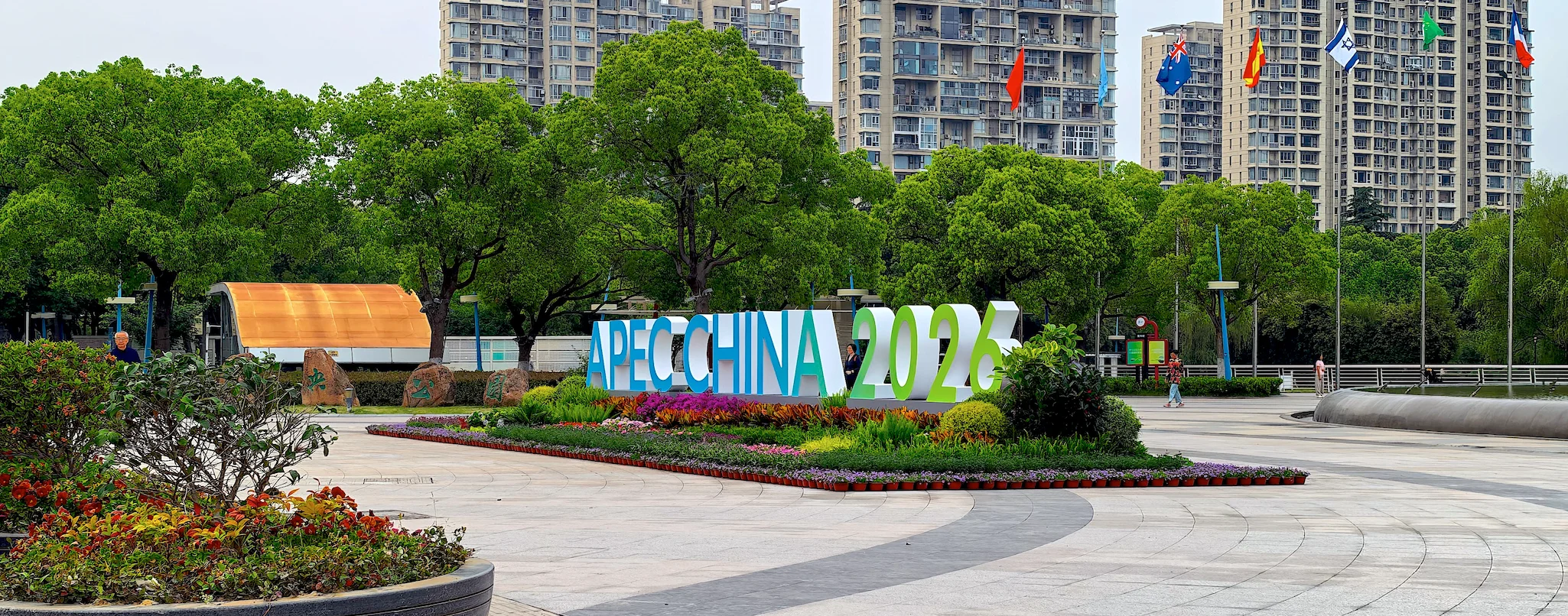
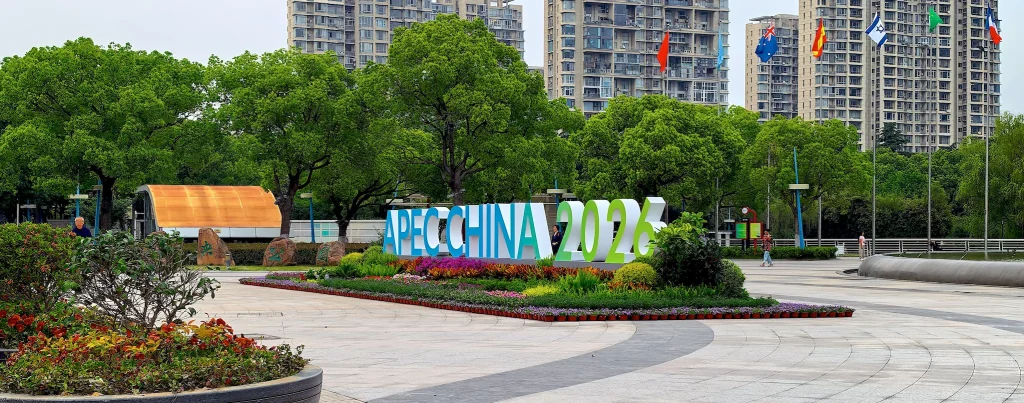
That’s why APEC 2026 in Suzhou is a useful procurement signal. The 32nd APEC Ministers Responsible for Trade Meeting took place at the Suzhou Jinji Lake International Convention Centre from May 20–23, 2026, with ministerial sessions on May 22–23 — the principal policy forum ahead of the APEC Economic Leaders’ Summit in Shenzhen this November. During the venue preparation for that event, Chenlift supplied ten MX-series self-propelled scissor lifts to support access operations across multiple installation zones, spanning MX580S through MX1600S.
This article isn’t about one event. It’s about the procurement logic behind it — and why that logic applies whether you’re a distributor building a rental fleet, a venue operator managing ongoing maintenance, or an industrial end-user with a deadline that doesn’t move.
Key takeaway: In high-stakes environments, procurement teams should buy evidence and uptime, not just a spec sheet.
What a ministerial venue actually demands from access equipment
A diplomatic conference venue isn’t a typical jobsite. The constraints aren’t always written into a tender document, but they’re real, and they narrow your options faster than most procurement teams expect.
The recurring priorities at events like this:
- Controlled, predictable behavior — stability sensors, proportional lift response, and guardrail systems that behave consistently across different operators
- Indoor-friendly operation — electric drive, low noise, no exhaust at the point of use
- Compliance readiness — documentation and training support available before deployment, not “we’ll send it later”
- Serviceability — because when a unit goes down 36 hours before opening, “we’ll look into it” is not an answer
The same logic applies when you’re not buying for an event. Airports, shopping malls, clean manufacturing, logistics hubs — anywhere people and fixed deadlines are close to the machine, the procurement bar rises. IPAF’s operator training standards reflect this directly: the emphasis is on site-specific risk assessment and pre-use inspection, not just machine capability on paper.
The five constraints that actually determine whether a machine can do the job
Most procurement teams approach venue projects with an industrial-site checklist: working height, rated capacity, price. That works in a factory. In a high-specification indoor venue, it misses the things that actually matter.
1. Noise — and why the installation window is almost always at 3 a.m.
Ministerial-level setup doesn’t happen during the day. Security sweeps, media pre-access, and protocol rehearsals occupy the venue from morning onward. The actual rigging, lighting installation, and structural work gets pushed to the 2–6 a.m. window in the days before opening.
At that hour, noise isn’t just an inconvenience. The Jinji Lake Convention Centre sits adjacent to a hotel zone with nighttime noise controls. Conventional hydraulic scissor lifts produce 65–75 dB during pump startup and lift cycles — in a hard-floored, high-ceiling hall, that reverberates.
The MX series runs on an Asynchronous AC Motor with Proportional Control, which delivers smooth, graduated lift rather than the abrupt surge of a hydraulic pump. The practical result is noticeably quieter operation during the hours when indoor venue work actually happens.
If your project involves overnight installation — exhibitions, airports, logistics centres — this isn’t a minor spec detail. It determines whether you can run the machine at all during your window.
2. Floor loading — the spec no one calculates until something goes wrong
Most international convention centres use raised access floor systems. Cable management runs underneath; the panels carry defined point load limits, often in the 500–800 kg/m² range, with lower ratings in some zones.
Ground contact pressure — machine weight divided by tyre contact area — determines whether your equipment is safe on those panels. It doesn’t appear prominently in most spec sheets, and it’s routinely skipped by rental teams that don’t do site-specific consultation.
The MX series runs from 1,500 kg (MX580S) to 4,200 kg (MX1600S), with tyre dimensions scaled accordingly: 305×100 mm on the smallest unit, 380×127 mm across the larger models. Before any unit entered the Jinji Lake venue, travel paths and stationary positions were mapped against the floor load ratings for each zone.
That step takes an hour. Skipping it and having a panel deflect under a 3-tonne machine takes considerably longer to resolve.
3. Emissions — the diesel prohibition that applies more broadly than most buyers realize
Indoor air quality requirements at premium venues prohibit combustion-engine equipment inside the hall. This isn’t limited to diplomatic events — it applies to airports, hospitals, food-safe manufacturing, and most high-end commercial facilities. The prohibition is operational, not aspirational.
The entire MX series is battery-electric: 4×6V lead-acid banks, 200Ah on MX580S through MX1200S, 260Ah on MX1400S and MX1600S. The onboard 24V/30A charger means units can be charged overnight inside the venue without being transported back out — which matters when you have a multi-day setup window and a floor plan increasingly occupied with equipment and materials.
4. Machine width — the dimension that decides whether you get in at all
The most common pre-mobilisation failure in venue projects: the machine arrives at the freight elevator and doesn’t fit.
This happens because procurement focused on working height and load capacity, not access geometry. A machine that can’t reach its work zone serves no purpose regardless of its other specifications.
The MX range is built around this problem:
| Model | Overall Width | Working Height | Rated Capacity | Machine Weight |
|---|---|---|---|---|
| MX580S | 0.76 m | 7.8 m | 230 kg | 1,500 kg |
| MX600SN | 0.81 m | 7.8 m | 230 kg | 2,050 kg |
| MX800SN | 0.81 m | 9.8 m | 230 kg | 2,150 kg |
| MX800S | 1.18 m | 9.8 m | 320 kg | 2,254 kg |
| MX1000S | 1.18 m | 11.8 m | 320 kg | 2,750 kg |
| MX1200S | 1.18 m | 13.8 m | 320 kg | 2,950 kg |
| MX1400S | 1.31 m | 15.8 m | 227 kg | 3,900 kg |
| MX1600S | 1.53 m | 17.8 m | 227 kg | 4,200 kg |
The MX580S at 0.76 m is designed specifically for corridor-width access, with zero inside turning radius — it rotates in place at a dead end without needing additional clearance. The SN variants at 0.81 m extend working height while keeping the narrow profile for freight elevator constraints.
The ten-unit allocation across the Jinji Lake venue was mapped directly against corridor widths and freight elevator dimensions for each zone — not standardized on one model for the whole site.
In addition, we also have the MX Mini series, which is smaller and more flexible, making it suitable for more confined spaces.
5. Serviceability — the question no spec sheet answers
If a unit develops a fault 36 hours before opening, what happens?
Every MX unit includes a standard Fault Diagnosis System that outputs error codes rather than requiring the operator to identify a problem from symptoms. That shortens diagnosis time. What shortens response time further is proximity: Chenlift manufactures in Suzhou and carries local after-sales support, which means a technician is reachable in hours rather than the days it takes to source parts through an import distribution chain.
For rental fleets and venue operators, this matters more than most technical specs. Uptime is the product.
How the ten units were actually deployed
With those five constraints established, the ten-unit allocation becomes a readable technical decision rather than a headline figure.
MX580S handled corridors, connecting passages, and auxiliary meeting rooms — zones with passage widths of 0.9–1.2 m where no other model in the fleet could operate. At 1,500 kg, it also produces the lowest ground contact pressure of any unit in the range, making it the right choice wherever floor loading is most constrained.
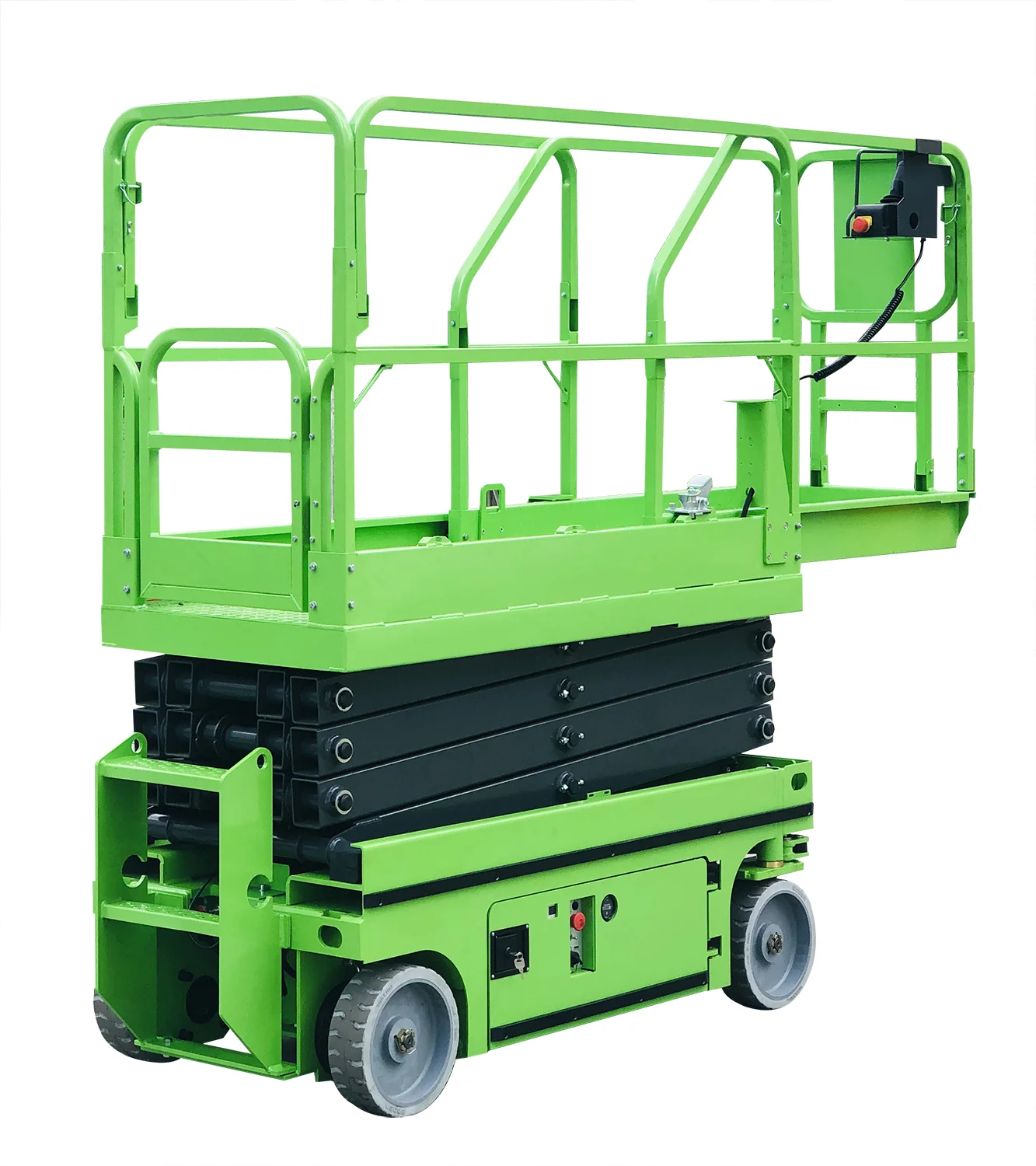
MX600SN and MX800SN covered lighting installation across both narrow-access zones and mid-height ceiling areas. The lighting infrastructure of a venue this size spans roughly 6–10 m of working height across ceiling pendants, corridor downlights, multimedia screen back-illumination, and camera rigs. The SN models — 0.81 m wide, platform lengths of 2.30 m — reach that full range while remaining accessible through freight elevators serving secondary zones. The longer platform also gives two operators room to work side by side on larger fixtures.
MX800S went to main hall tasks requiring both reach and load capacity: stage backdrop framing, audio equipment rigging, and structural installation where 320 kg rated capacity and a 2.30×1.15 m platform are practical requirements, not nice-to-haves.
MX1000S and MX1200S addressed upper truss and large-format screen suspension work — the structural layer of a main hall sitting between 11 m and 14 m. Both share the 1.18 m width of the MX800S and the same 320 kg capacity. The standard Extension Platform adds 0.90 m of horizontal reach beyond the platform edge, which reduces repositioning cycles during truss connection work significantly.
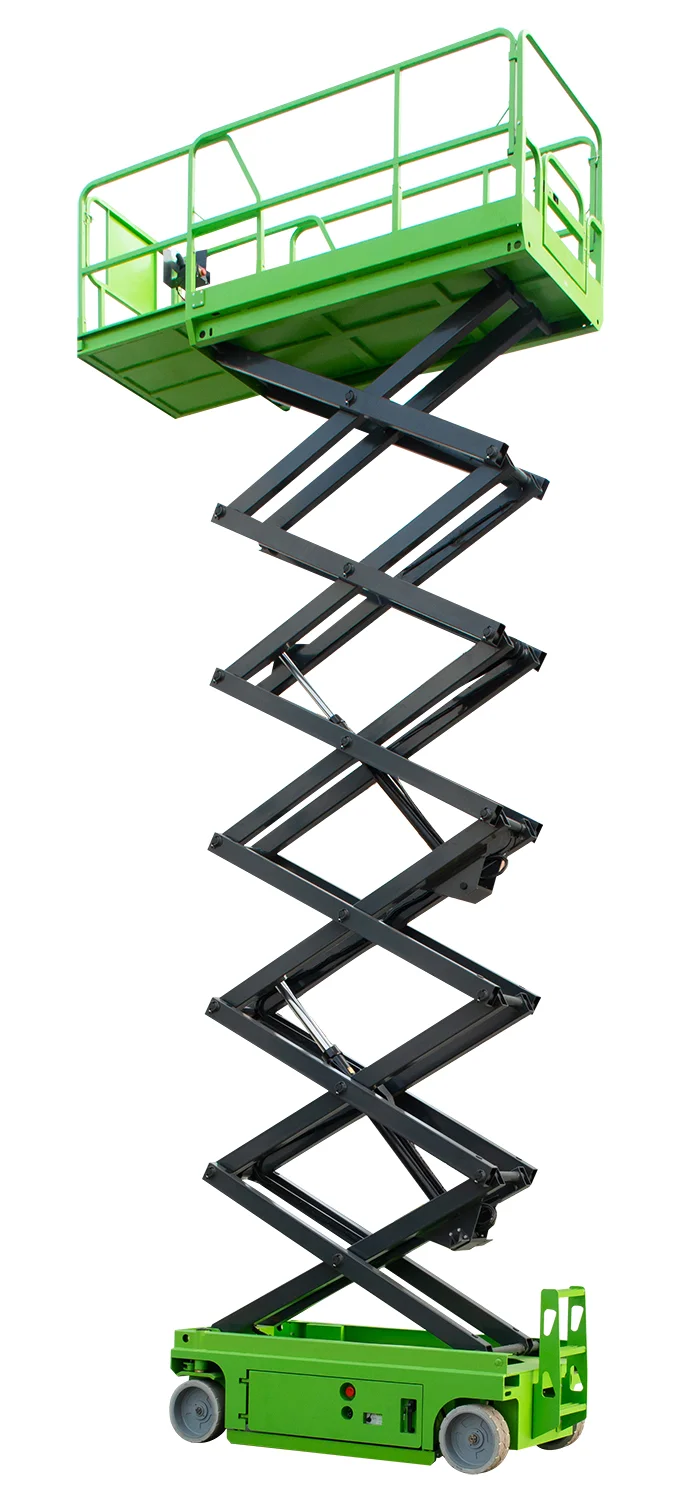
MX1400S and MX1600S operated in exterior connection areas and venue entrance canopy installation — solid-floor zones where their respective weights of 3,900 kg and 4,200 kg could be managed safely, and where 25% gradeability handled ramp transitions between interior and exterior ground levels. Neither unit entered raised-floor zones.
Common procurement mistakes in indoor venue projects
These come up repeatedly — not just in event environments, but in airports, malls, and any facility where finished surfaces and tight schedules overlap.
Specifying height before checking access geometry. Working height is the first number everyone looks at. Machine width, stowed height, and turning radius are what actually determine whether the unit reaches its work zone. In venues with freight elevators and finished corridors, access geometry should be the first filter, not an afterthought.
Skipping floor load calculations. Raised access floors have defined point load limits. A 3-tonne machine on the wrong panel causes damage that costs more to repair than the rental saved by not consulting. This calculation takes an hour and is almost never done by teams renting equipment without site-specific support.
Bringing diesel equipment indoors. Combustion-engine units are operationally prohibited in most enclosed premium facilities — not just on environmental grounds, but because exhaust in a sealed high-ceiling hall creates air quality and liability issues that no venue manager will accept. Electric-only is the baseline requirement for this category of work, not a premium option.
Treating “CE certified” as a complete compliance answer. CE certification is a market access requirement, not an operational readiness checklist. Procurement for indoor or multi-stakeholder environments also requires operator manuals, inspection checklists, maintenance schedules, and a defined parts and service plan. The certification tells you the machine was built to standard; the documentation tells you whether it can be operated and maintained safely at your site.
No contingency plan for equipment downtime. A single-supplier rental with no backup unit and no defined response-time commitment is a schedule risk, not a cost saving. In any project where the equipment window is fixed, the contingency question should be part of the procurement conversation, not something addressed after a fault occurs.
A procurement evidence pack — what to ask any supplier, including us
Whether you’re evaluating Chenlift or anyone else, the criteria should be consistent.
For distributors
- Certifications and conformity documentation for your target market — not “we’re CE certified” but the specific documents that ship with the machine
- Dealer-ready materials: operator manuals, parts lists, labeling options
- OEM and customization scope — what can be configured without affecting compliance certification
→ CE and ISO 9001 certification documentation · OEM and customization options
For rental fleets
- Preventive maintenance schedules and recommended wear parts list
- Spare parts dispatch expectations — what’s stocked, where, and at what lead time
- Pre-delivery inspection process and whether third-party inspection can be accommodated
→ Why Chenlift — manufacturing and QC overview · Buying, shipping and warranty FAQ
For industrial end-users
- Operator documentation and site-specific safety guidance
- Maintenance responsibility clarity — what the manufacturer covers, what falls to the operator, and at what intervals
- Technical support channels and expected response time for troubleshooting
→ Get in touch with our technical team
A useful test before committing: Don’t just ask “Are you CE certified?” Ask “What exact documents ship with the machine, and what can you provide before shipment so our team can review compliance before the unit arrives?” The answer tells you more than the certificate.
FAQs
What is a self-propelled scissor lift? A self-propelled scissor lift is a mobile elevating work platform that raises a work surface vertically through a folding scissor mechanism while allowing the operator to drive and reposition the unit independently. Unlike push-around or manual platforms, self-propelled models are battery-powered and can travel while elevated at reduced speed to fine-tune position without lowering.
What should procurement teams verify before buying or renting for an indoor venue? Start with four site parameters: narrowest access route width, lowest overhead clearance on access routes, floor type and bearing capacity, and freight elevator internal dimensions. These determine which models can physically reach the work zone before any other specification becomes relevant. Then verify documentation, compliance readiness for your region, service and parts support, and environment fit.
Is CE certification sufficient for indoor or event work? CE documentation is a baseline, not a complete answer. Indoor and high-traffic deployments also require operator manuals, inspection checklists, maintenance guidance, and a defined service and parts plan. The goal is operational readiness on day one — not a compliance conversation after the equipment is on site.
Why does machine width matter more than working height for many indoor projects? Working height determines what you can reach. Machine width determines whether you can get there. In venues with freight elevators, connecting corridors, and finished interior surfaces, a machine that exceeds the access geometry of its assigned zone is functionally useless regardless of its height rating.
What’s the difference between the standard and narrow-body (SN) MX models? The SN variants — MX600SN and MX800SN — have an overall width of 0.81 m versus 1.18 m on the standard MX800S. They trade some platform width (0.81 m versus 1.15 m) for access through tighter routes, while maintaining working heights of 7.8 m and 9.8 m. For zones where the freight elevator or corridor is the binding constraint, the SN models extend the operational range of a fleet without requiring a separate product category.
How do you calculate whether a scissor lift is safe on a raised access floor? Divide the machine’s total weight by the combined contact area of its tyres. Compare the result against the point load rating for the floor panels in the relevant zone — typically provided by the venue’s facilities team or the floor system manufacturer. If you’re unsure, request this data before mobilisation, not after.
Next steps
Review full technical specifications and download datasheets: MX-series product catalog OR
MX-series self-propelled scissor lifts
For private label or market-specific configuration requirements: OEM and customization options
For CE and ISO 9001 compliance documentation: Chenlift certifications
Questions before requesting a quote: Buying and shipping FAQ · Contact the sales team
Media Registration Opens for Ministers Responsible for Trade Meeting in Suzhou
CHENLIFT (SUZHOU) MACHINERY CO., LTD. — CE certified scissor lift manufacturer, factory-direct, exported to 80+ countries since 2001. ISO 9001 · CE · IPAF Member.